
TL;DR
Member calls tell health insurers what members find unclear about reimbursements, rules, delays, premiums and cancellations, yet most of those calls are never analysed. The French-speaking Mutualité chrétienne received 1,446,335 phone calls in 2022, up 31% in a year, and complaints filed with CM/MC rose to 18,007 in 2025, against 11,937 the year before. In France, average complementary health premiums rose by 8.1% in 2024 (press figures), and about one contract in nine is cancelled by the policyholder each year. This guide covers how members get in touch, what they escalate, premiums and cancellations, phone-sales risk, what to extract from each call and health data.
Health insurance is the most personal product a member owns, and the hardest to understand. What is covered, how much comes back, how long it takes, why the premium went up: members ask, and they mostly ask on the phone. Those calls hold the answers health insurers need about complaints, cancellations and the clarity of their own rules. Most of them are never analysed.
Key figures
| Figure | Value | Source |
|---|---|---|
| Phone calls received by the French-speaking Mutualité chrétienne, 2022 | 1,446,335 (+31%) | MC annual report 2022 |
| Calls answered by Solidaris Wallonie, 2024 | 729,048 | Solidaris Wallonie, rapport moral 2024 |
| Health-insurance requests to the Belgian insurance ombudsman, 2025 | 1,205 (+18%) | Ombudsman des Assurances 2025 |
| Complaints filed with CM/MC, 2025 | 18,007 | CM/MC ombudsman report 2025 |
| Belgians with hospitalisation insurance | more than 9 million | Assuralia |
| Average French complementary health premium increase, 2024 | +8.1% | Press, citing Mutualité Française data |
| French complementary health contracts cancelled by the policyholder, 2022 | 11.0% | CCSF / Optimind |
| French complementary health requests to La Médiation de l'Assurance, 2025 | +97% in a year | La Médiation de l'Assurance |
1. The phone is still the main door
Belgium's sickness funds (mutualités / ziekenfondsen) handle compulsory health insurance for the whole population, plus complementary cover. The two largest groups alone serve millions: the Christian mutuality counted 4.73 million members in 2025, the Mutualités Libres 2.37 million.
Their annual reports show how members get in touch:
- The French-speaking Mutualité chrétienne received 1,446,335 phone calls in 2022, up 31% in a year, while e-mails halved. A chatbot handled a growing share of chat sessions, but it did not absorb the phone.
- Solidaris Wallonie answered 729,048 calls in 2024, alongside 974,814 agency visits. Only about 3% of complementary-insurance reimbursement requests were submitted online.
- Solidaris Brabant extended its contact-centre hours by 50% in 2025, from 28.5 to 40 hours a week.
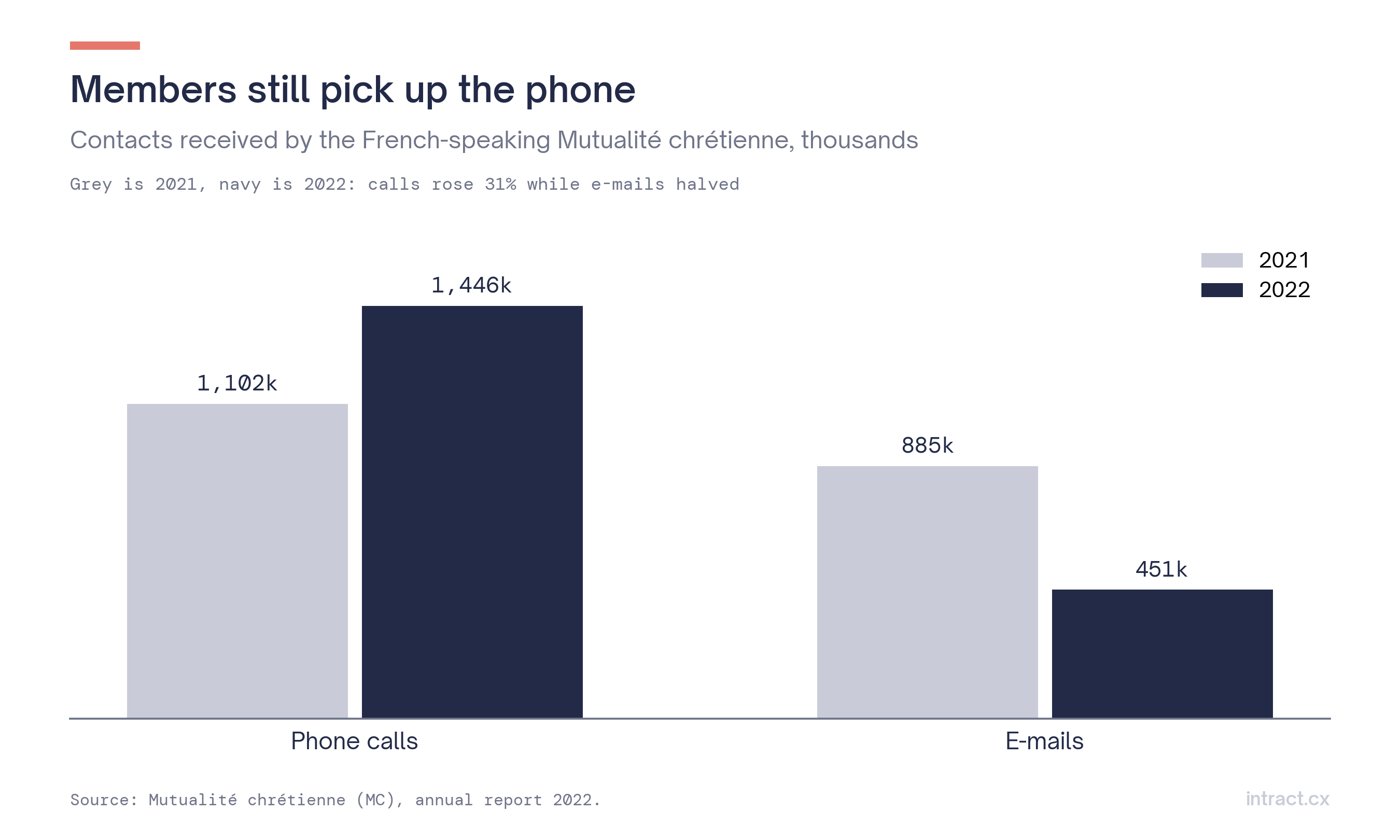 Figure 1. Calls rose while e-mails fell (French-speaking MC).
A million calls a year is a million explanations of what members find unclear. It is also, today, a million conversations almost nobody listens to after they end.
2. What members escalate
Sickness funds
Complaints filed with the Christian mutuality rose to 18,007 in 2025, against 11,937 the year before. Only 3.2% reached its ombudsman for mediation, but those cases show where things break.
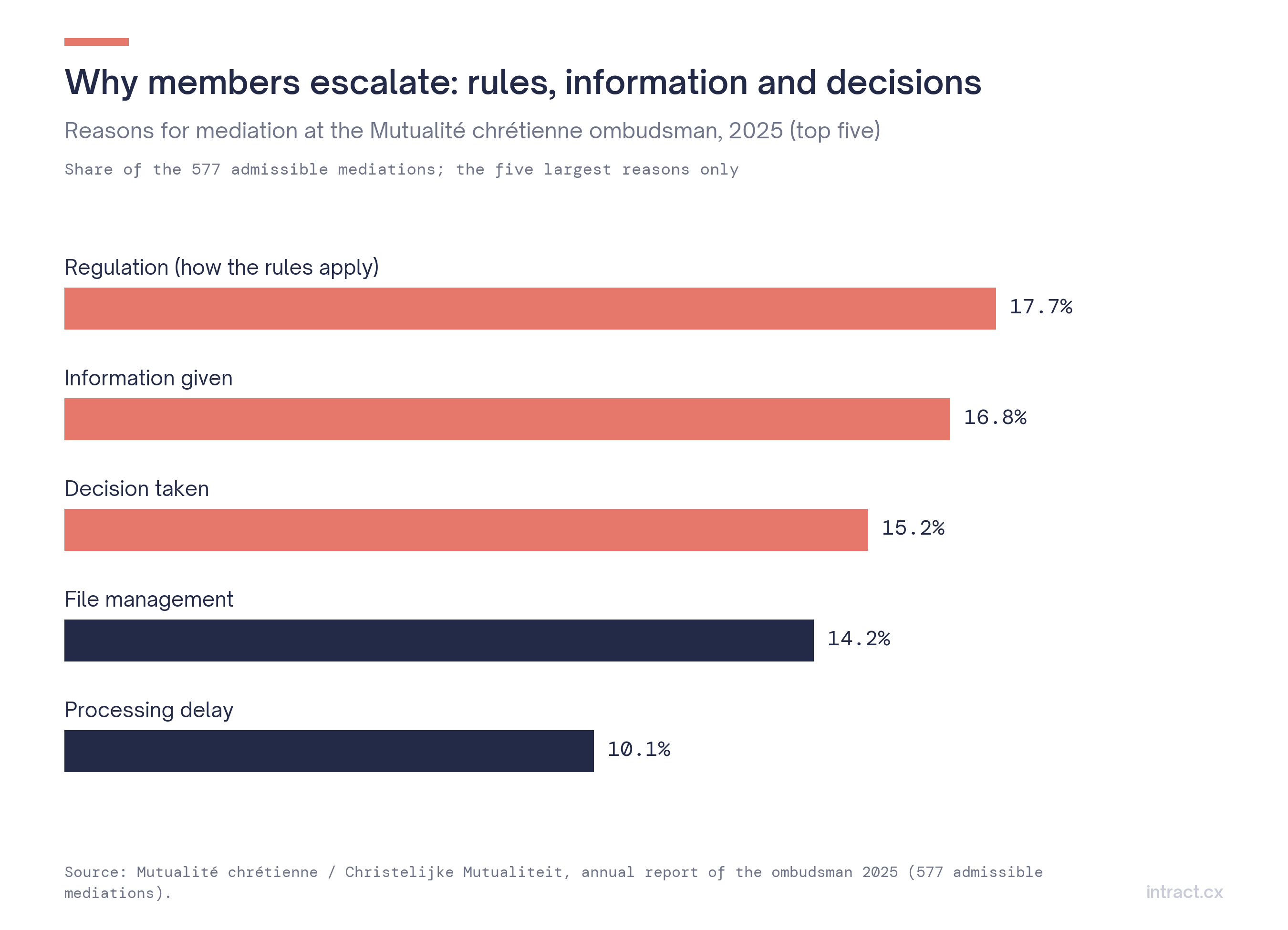 Figure 2. Top five reasons for mediation, Mutualité chrétienne ombudsman, 2025.
The top reasons are how the rules apply (17.7%), the information given (16.8%), the decision taken (15.3%), file management (14.2%) and processing delays (10.1%). Sickness and disability income is the largest topic, with reimbursements and complementary cover (hospitalisation, dental) close behind. The ombudsman also notes that many files mention difficulty reaching the mutuality, even though only 18 complaints were formally about accessibility.
Two of the top five reasons, information and delay, are exactly what members call about before they complain.
Health insurers
At the Belgian insurance ombudsman, health-insurance requests reached 1,205 in 2025, up 18%, after 1,022 in 2024.
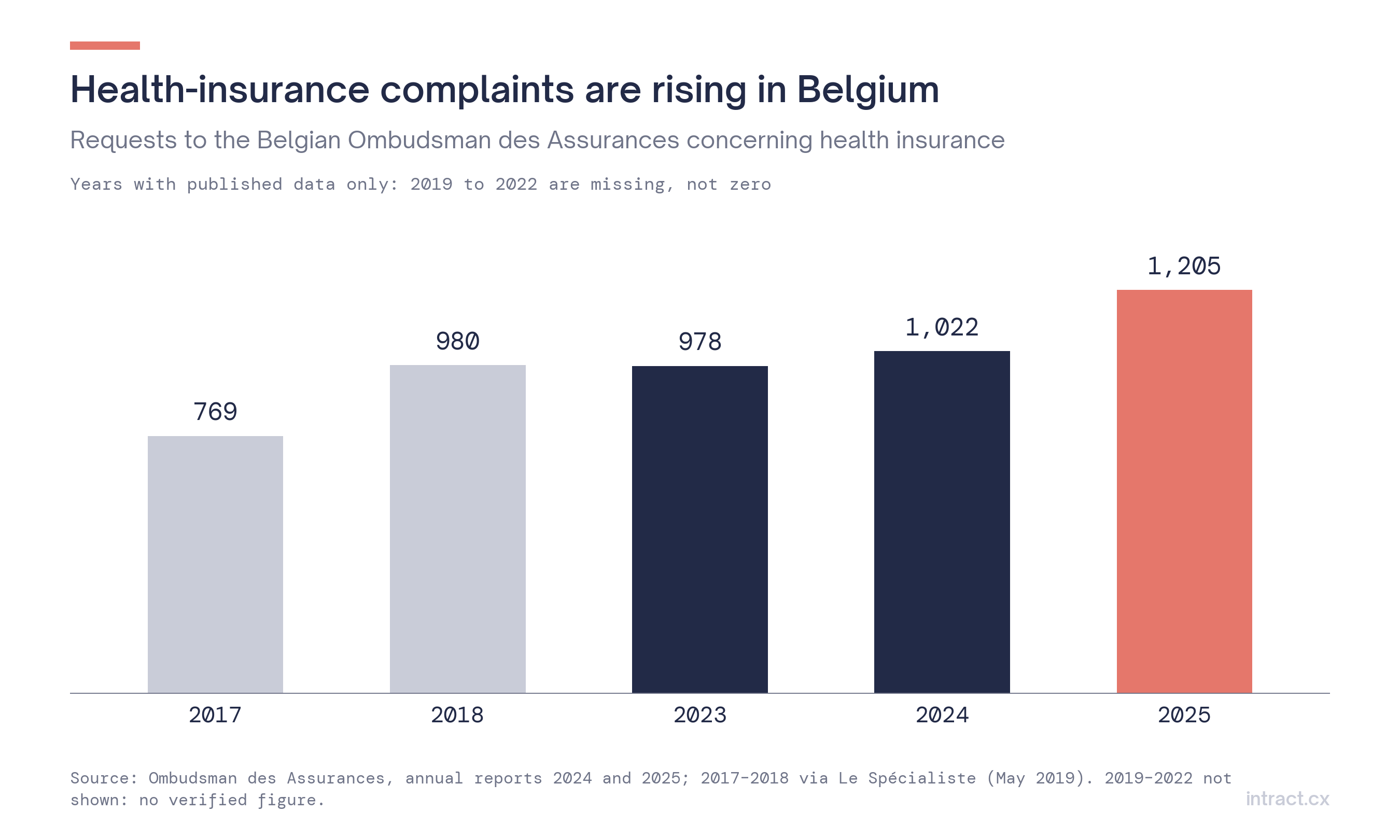 Figure 3. Health-insurance requests to the Ombudsman des Assurances (years with published figures).
The ombudsman's reports point to recurring themes: premium increases linked to indexation, age or moving to a more expensive region; cancellation rights after an increase; long waits for medical-adviser checks; and the 30-day pre-hospitalisation and 90-day post-hospitalisation windows that members find too short.
3. Premiums, renewals and cancellations
Belgium: the medical index
More than 9 million Belgians have hospitalisation insurance. Insurers can index premiums each year using a specific medical index, if the contract allows it and the index exceeds consumer inflation. The index varies by type of cover: for 2025, the caps were +13.36% for single-room cover and +7.09% for shared rooms (comparator source). Every indexation wave produces a wave of "why did my premium go up?" calls.
France: the cost of a free exit
France made complementary health insurance cancellable at any time after the first year (law of 14 July 2019, in force since December 2020). The CCSF's review found that cancellations at the policyholder's initiative rose from 9.5% of contracts in 2020 to 11.2% in 2021 and 11.0% in 2022. Price was the main reason given, and 46% of those cancellations were by people aged 62 or over.
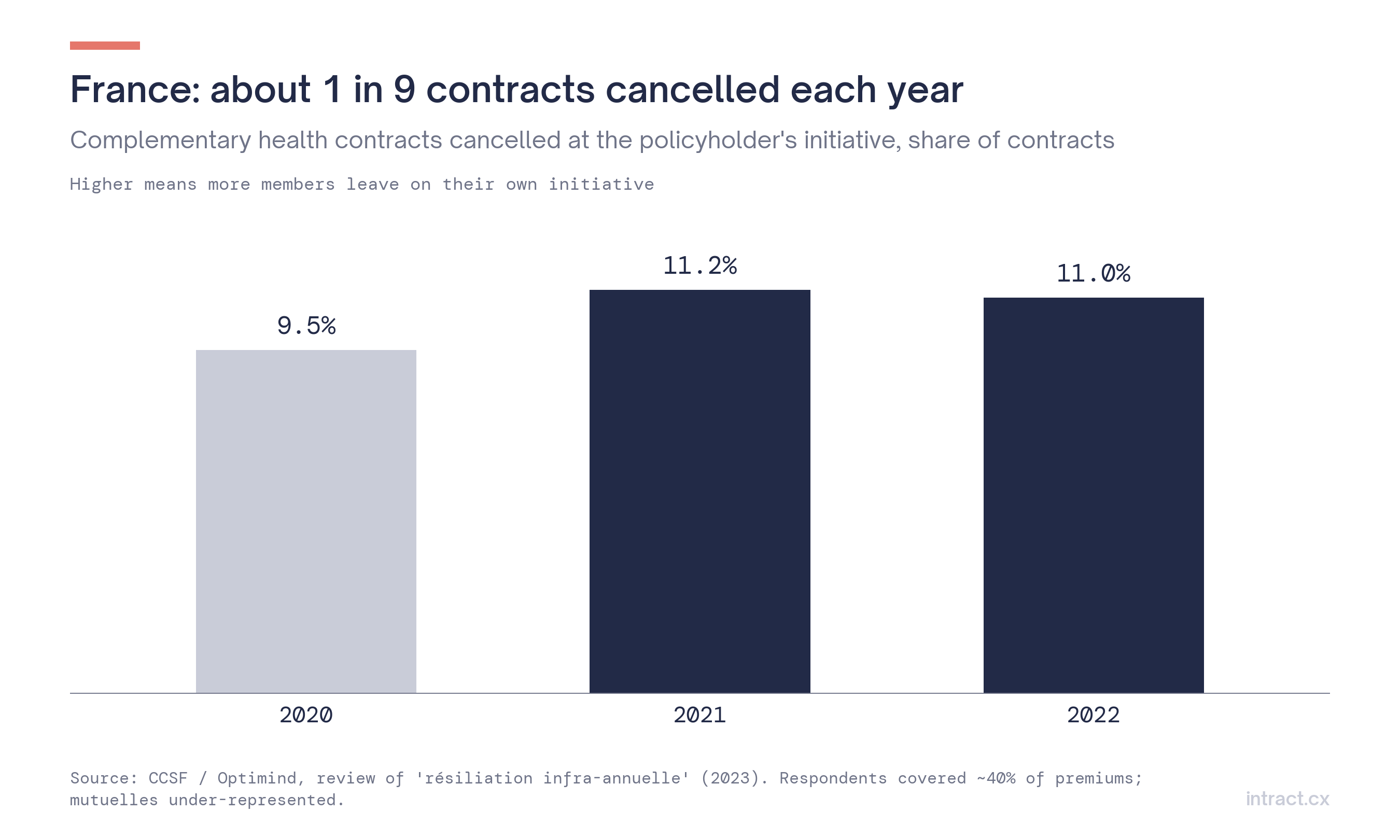 Figure 4. About one contract in nine is cancelled by the policyholder each year.
Meanwhile, premiums kept rising: by about +3.4% in 2022, +4.7% in 2023, +8.1% in 2024 and +6% in 2025, according to press reports, with around +4.5% announced for 2026. The 2026 social security financing law then froze 2026 premiums at 2025 levels, and consumer groups urged members to claim refunds; the ministry asked the Conseil d'État for an opinion. Few things generate calls like a contested price rise.
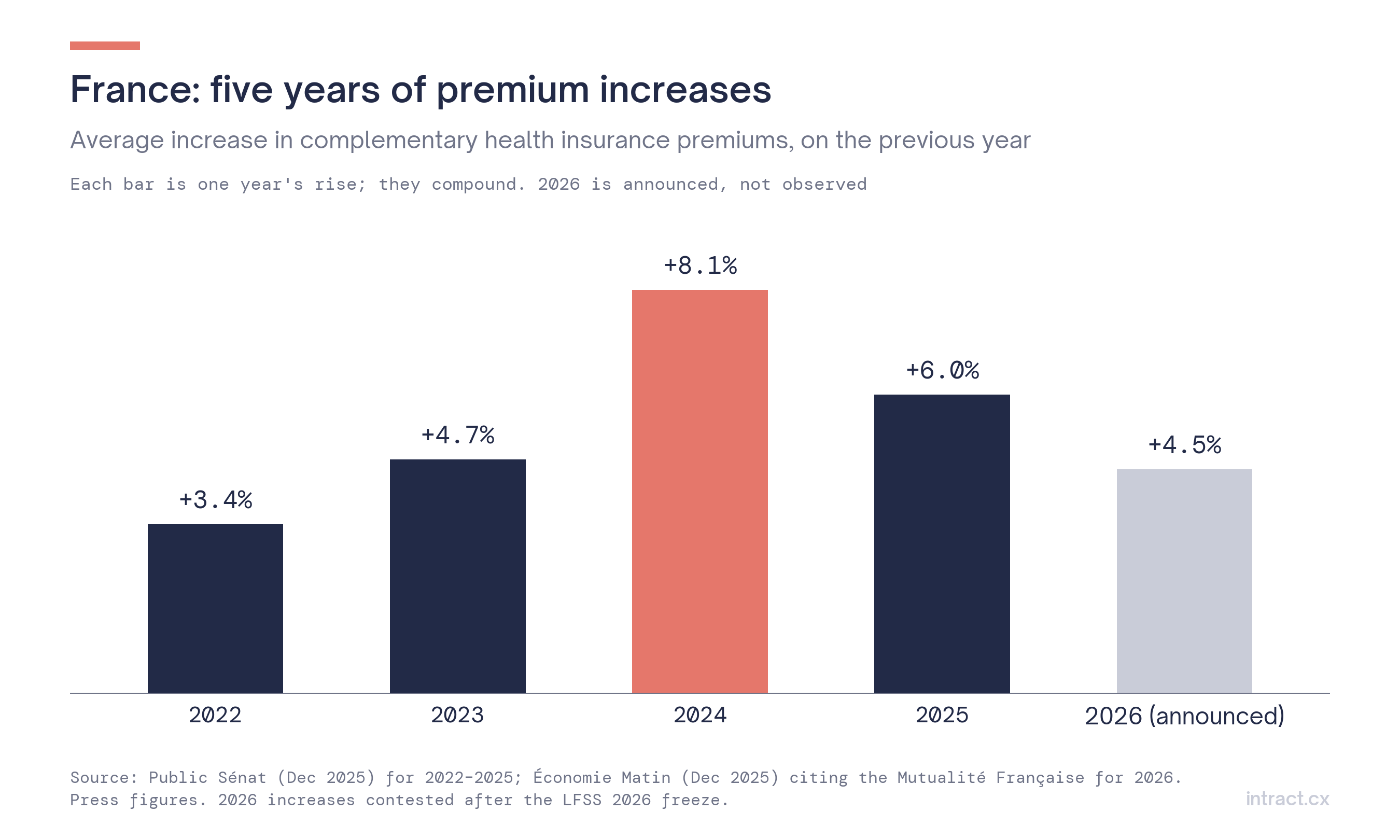 Figure 5. Average complementary health premium increases (press figures).
The market context matters: DREES counts 373 complementary health organisations with €46.5bn in premiums in 2024, returning 79% as benefits. Requests about complementary health to La Médiation de l'Assurance almost doubled (+97%) in 2025, with members struggling to understand how much they will be reimbursed.
4. Selling health cover by phone: a known risk
French enforcement shows what can go wrong when health cover is sold on the phone. The DGCCRF's 2021–2022 checks of the sector found 34% of 147 establishments in breach, and 38% of phone sellers failing to respect consumer rights. Elderly people were sold new contracts presented as a simple amendment to their existing mutuelle, and some contracts were signed in a single call despite the legal 24-hour delay.
For any health insurer selling or renewing by phone, the same compliance logic as for other insurance applies: needs asked, cover and exclusions explained, waiting periods stated, cooling-off mentioned (see our article on insurance sales compliance).
5. What member calls can tell you, if someone listens
| Question | What to extract from each call | Who uses it |
|---|---|---|
| Why are members calling? | Contact reason: reimbursement status, amount, coverage, premium, cancellation, documents, third-party payment | Operations, planning |
| Which rules confuse them? | The benefit or rule mentioned + "didn't understand" signal | Product, communication |
| Where do delays hurt? | Reimbursement or file delay mentioned, number of previous contacts | Operations |
| Who is about to leave? | Cancellation intent, price objection, competitor named | Retention |
| Which calls are really complaints? | Dissatisfaction, mention of the ombudsman or mediator | Complaints team |
| Are phone sales compliant? | Checklist per sales or renewal call | Compliance |
The ombudsman data shows these themes reach mediation months later. In the calls, they appear the same week.
6. A word on health data
Member calls often mention diagnoses, treatments and hospital stays. Under the GDPR, health data is a special category (Art. 9), and the EU Court of Justice has held that data from which health information can be inferred, even with a certain probability, counts too. In France, hosting health data for others can also require HDS certification under the public health code. Any analytics project on member calls should start with a data protection impact assessment and a clear view of where data is hosted and who can access it.
How Intract supports this
Intract transcribes and analyses every member call it receives (natively from Aircall or Vonage, or through its API) and produces a structured record: summary, business impact, sentiment, urgency and churn risk. Complaints are surfaced on the member's profile, in filters, dashboards and Teams alerts. Your contact-reason taxonomy (reimbursement, contribution, coverage, cancellation…) runs as a no-code classifier, tested on your calls before going live; renewal and enrolment calls can be scored against a checklist. Dashboards show reasons and complaint signals by team and period, a Microsoft Teams alert can notify the complaints team when a member mentions the ombudsman, and periodic reports group recurring issues with each claim linked to the calls behind it. Data is hosted in the EU, with configurable audio retention; the interface works in French, Dutch, German and English.
Your team can push business metadata (contract type, product) with each call through the API.
FAQ
What do members call health insurers about most? There is no neutral public benchmark. Ombudsman reports point to reimbursements, rules and information, delays, premiums and cancellations; your own calls will give you the exact mix.
Can we define what counts as a complaint? Yes: your definition, written once and tested on your calls.
Where are member conversations stored? In the EU. Confirm hosting requirements for health data in your country with your DPO.
Methodology and sources
Contact figures come from individual mutualities' annual reports and are not comparable across organisations (different scopes and years). Ombudsman figures are those published for each year; 2019–2022 are not shown because we could not verify them. French premium increases come from press articles citing Mutualité Française data. The Ombudsman des Assurances 2025 page describes the total as stable while also citing +13%; we use only the health-insurance figure.
- Mutualité chrétienne, Annual report 2022; Ombudsman report 2025
- Mutualités Libres, Rapport annuel 2025
- Solidaris Wallonie, Rapport moral 2024; Solidaris Brabant, Rapport moral 2025
- Ombudsman des Assurances, Rapport annuel 2025 and 2024; Le Spécialiste, 2018 figures
- Assuralia, L'assurance hospitalisation; Selectra, Hausse assurance hospitalisation
- CCSF / Optimind, Résiliation infra-annuelle santé (2023)
- DREES, Principaux enseignements 2025
- Public Sénat, Cotisations des mutuelles (Dec 2025); Économie Matin, Hausses 2026; Moneyvox, Gel 2026 et Conseil d'État
- La Médiation de l'Assurance, Rapport annuel 2025, communiqué
- DGCCRF, Bilan 2021–2022 des enquêtes
- CNIL, Données de santé; CJEU C-21/23, Lindenapotheke (2024)