
TL;DR
On every insurance sales call, check that the agent identifies themselves, asks about needs before presenting the product, says the insurance is optional, states the cost, exclusions and cooling-off period, confirms documents are sent, and addresses hesitation rather than pushing through. Supervisors are looking: EIOPA found only about 18% of consumer-credit credit protection insurance premium was paid back as claims (2018–2020) and issued a formal warning over tying and pressure-selling. In the UK, PPI led to more than £38bn in redress. This guide covers the IDD, distance-selling and French canvassing rules, a 10-point checklist and how to turn it into evidence. It is not legal advice.
A phone sale leaves only one complete record of what the customer was told: the call itself. Regulators know it, which is why the EU texts that govern insurance distribution treat telephone selling as a case of its own, and why the European insurance supervisor has singled out one product often sold over the phone by lenders: credit protection insurance.
This article sets out what the rules require, what supervisors found when they looked, and a practical checklist to verify on every call. It is not legal advice; check the national transposition that applies to you.
Key figures
| Figure | Value | Source |
|---|---|---|
| Share of consumer-credit CPI premium paid back as claims (EU, 2018–2020) | ~18% | EIOPA thematic review, 2022 |
| Of €1 of single-premium consumer-credit CPI premium: to banks / to insurers / to claims | 40¢ / 35¢ / 11¢ | EIOPA, 2022 |
| Commission on credit-card CPI (share of premium) | 70–80% | EIOPA, 2022 |
| PPI redress paid in the UK | £38bn+ | FCA, 2020 |
| Share of Belgian individual life premiums sold through banks | 46.1% | Assuralia, 2024 data |
| Belgian insurance products adjusted after FSMA value-for-money reviews | 234 | FSMA annual report 2025 (press coverage) |
1. The rules that apply to a phone sale
The Insurance Distribution Directive (IDD)
The IDD (Directive (EU) 2016/97) sets the conduct baseline for anyone selling insurance in the EU. The articles that translate directly into call-level checks:
| Article | Obligation | What it means on a call |
|---|---|---|
| Art. 17 | Act honestly, fairly and professionally in the customer's best interest | No pressure, no misleading framing |
| Art. 19 | Pre-contract disclosures, including the nature of remuneration and whether advice is given | The agent says who they are and how they are paid |
| Art. 20 | Identify the customer's demands and needs; any contract proposed must be consistent with them | Needs questions are asked before the product is pitched |
| Art. 20 | Standardised product information document (IPID) for non-life products | The key features and exclusions are covered |
| Art. 23(7) | Telephone selling follows EU distance-marketing rules; information on a durable medium immediately after conclusion | Documents are sent, and the agent says so |
| Art. 24 | Cross-selling: say whether components can be bought separately, with costs | "You can take the loan without the insurance" is said explicitly |
Distance marketing of financial services
Article 23(7) of the IDD points to the distance-marketing rules. Those were recast by Directive (EU) 2023/2673, which applies from 19 June 2026. Points relevant to calls:
- A 14-calendar-day withdrawal right (30 days for personal pension products). If the required information was never provided, the period can extend to 12 months and 14 days.
- A right to adequate explanations before the contract, including the consequences of late or missed payment, with the burden of proof on the trader.
Life insurance cooling-off
Separately, Solvency II, Art. 186 gives life policyholders a cancellation period of 14 to 30 days, set by each Member State.
France: specific rules for insurance phone canvassing
Since 1 April 2022, French rules on insurance phone canvassing (from the law of 8 April 2021 and its décrets) require the consumer's agreement at the start of the call, information that the call is recorded, retention of the recording for two years when a contract is concluded, and no signature during the call or within 24 hours of receiving the documents. A broader opt-in regime for phone canvassing applies from 11 August 2026, with fines of up to €375,000 per call for companies. Calls with existing customers about their contract are exempt.
2. What supervisors found: the credit protection insurance case
In October 2022, EIOPA published a thematic review of credit protection insurance (CPI) sold via banks, covering 174 insurers and 145 banks. CPI is the insurance sold alongside a mortgage, a consumer loan or a credit card, often at the moment the loan is granted and often by phone.
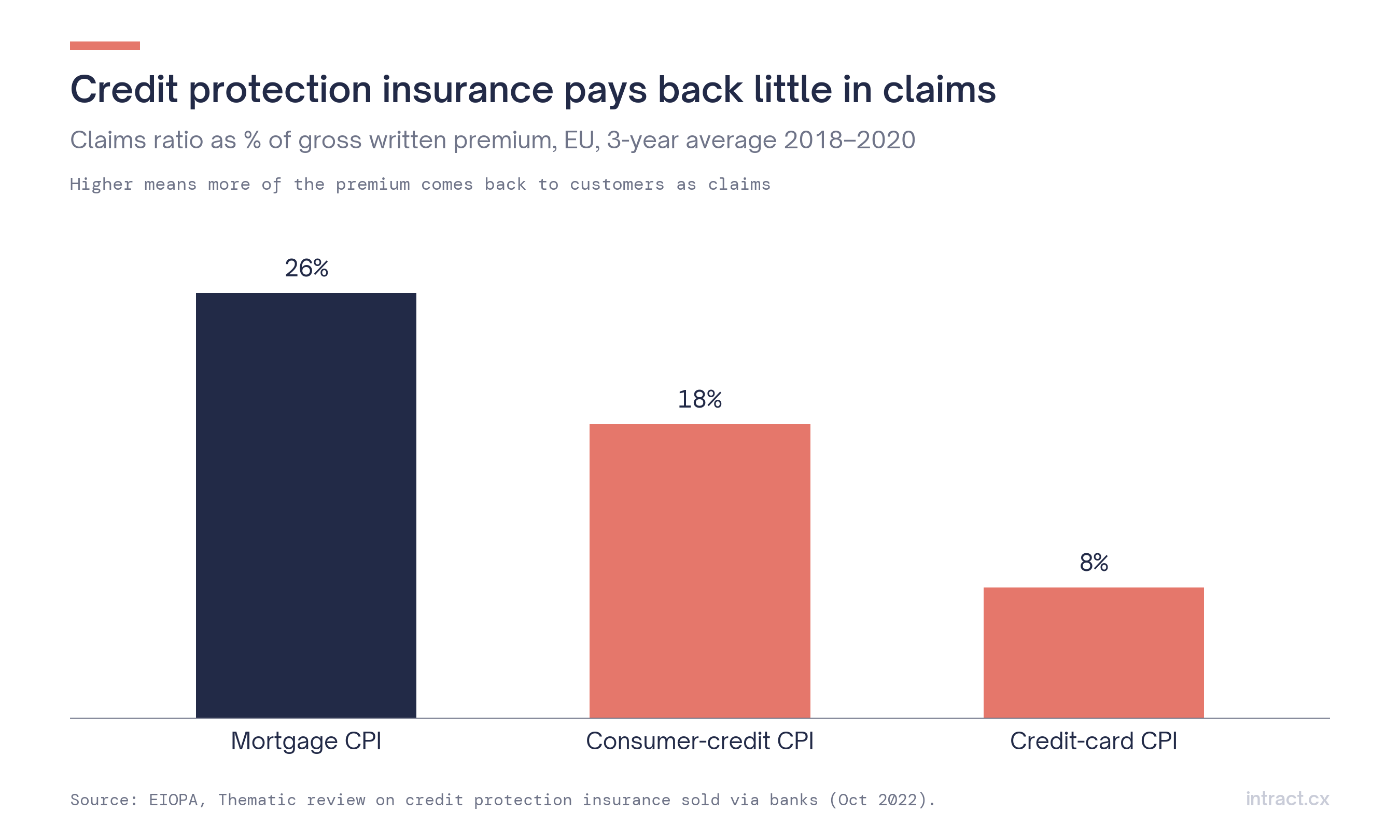 Figure 1. Claims paid as a share of premium, 3-year average 2018–2020.
Claims ratios were low across the board: about 26% for mortgage CPI, 18% for consumer-credit CPI and 8% for credit-card CPI. In other words, 74% to 92% of premiums went to costs and profit.
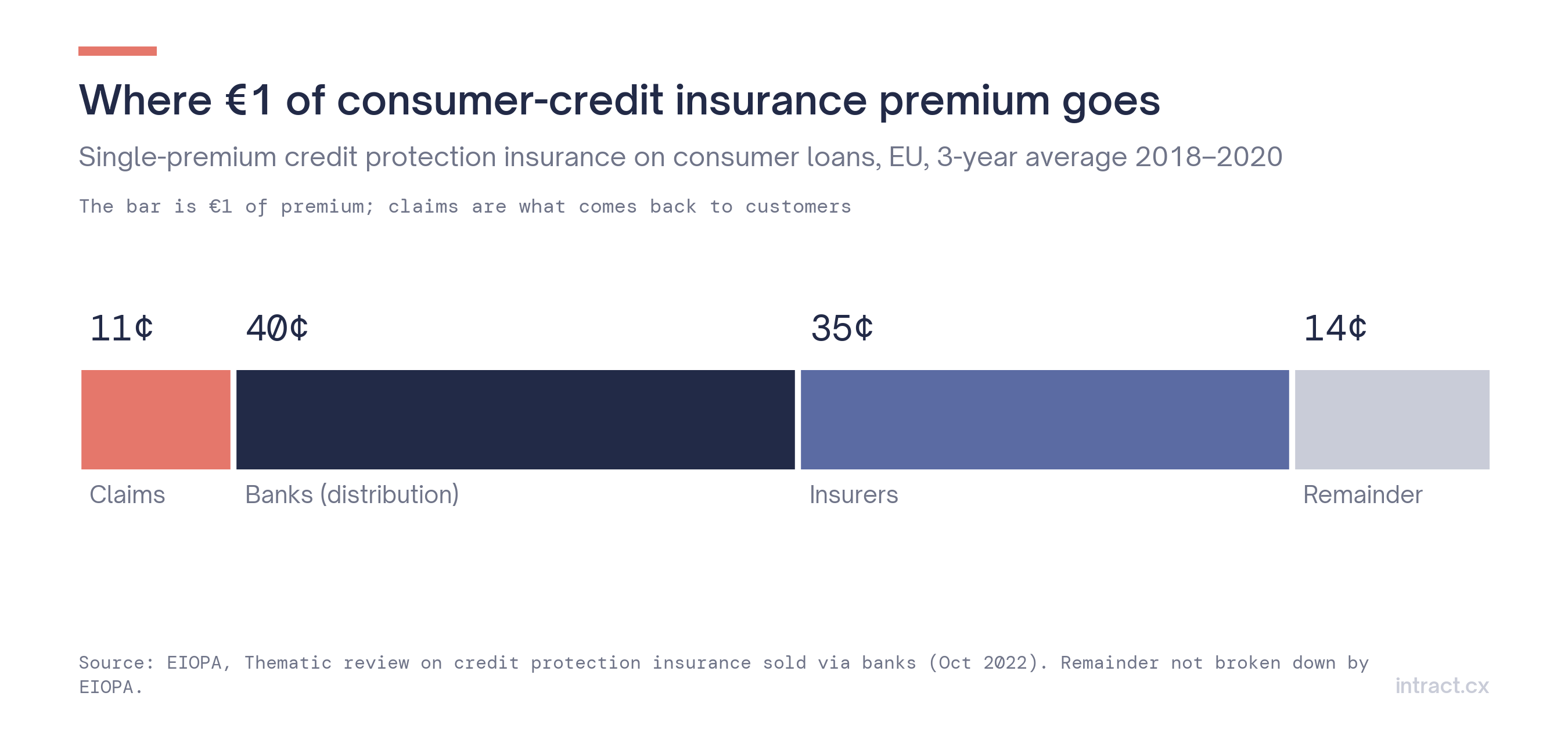 Figure 2. Single-premium consumer-credit CPI: banks receive about 40 cents per euro, customers about 11 cents in claims.
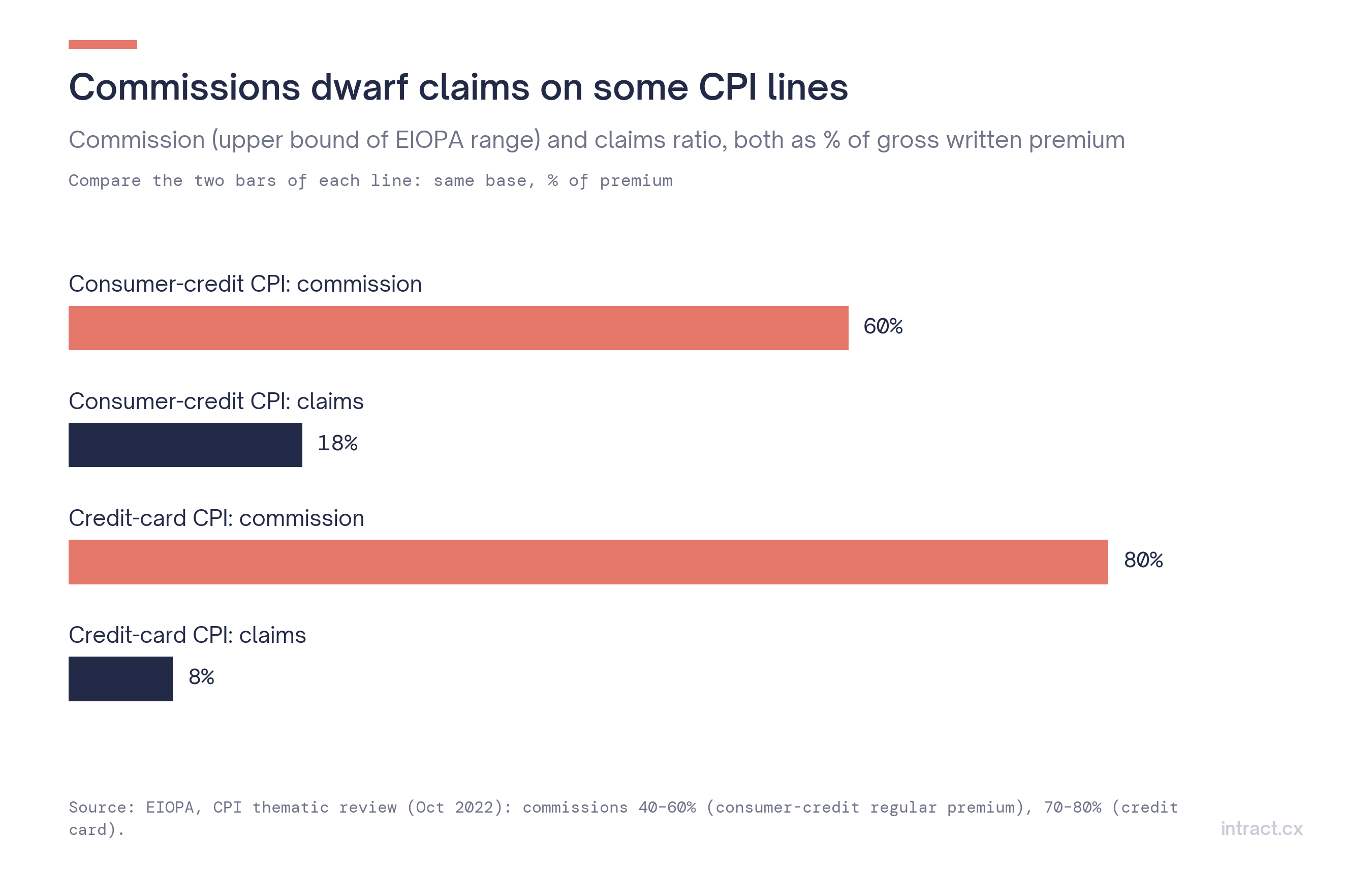 Figure 3. Commissions reach 40–60% of premium on consumer-credit CPI and 70–80% on credit-card CPI (upper bounds shown).
EIOPA found that 83% of banks sell CPI tied to the credit, and it issued a formal warning to insurers and banks over conflicts of interest, tying, pressure-selling and misleading information. The market is large: €5.5bn of consumer-credit CPI premiums across 44 million policies in 2020.
The UK shows how expensive this can become. Payment protection insurance (PPI), a close cousin of CPI, led to more than £38bn in redress and over 32 million complaints.
3. Why this matters in Belgium
Banks are a major insurance distribution channel in Belgium. In 2024, bancassurance accounted for 46.1% of individual life premiums, ahead of brokers (44.1%).
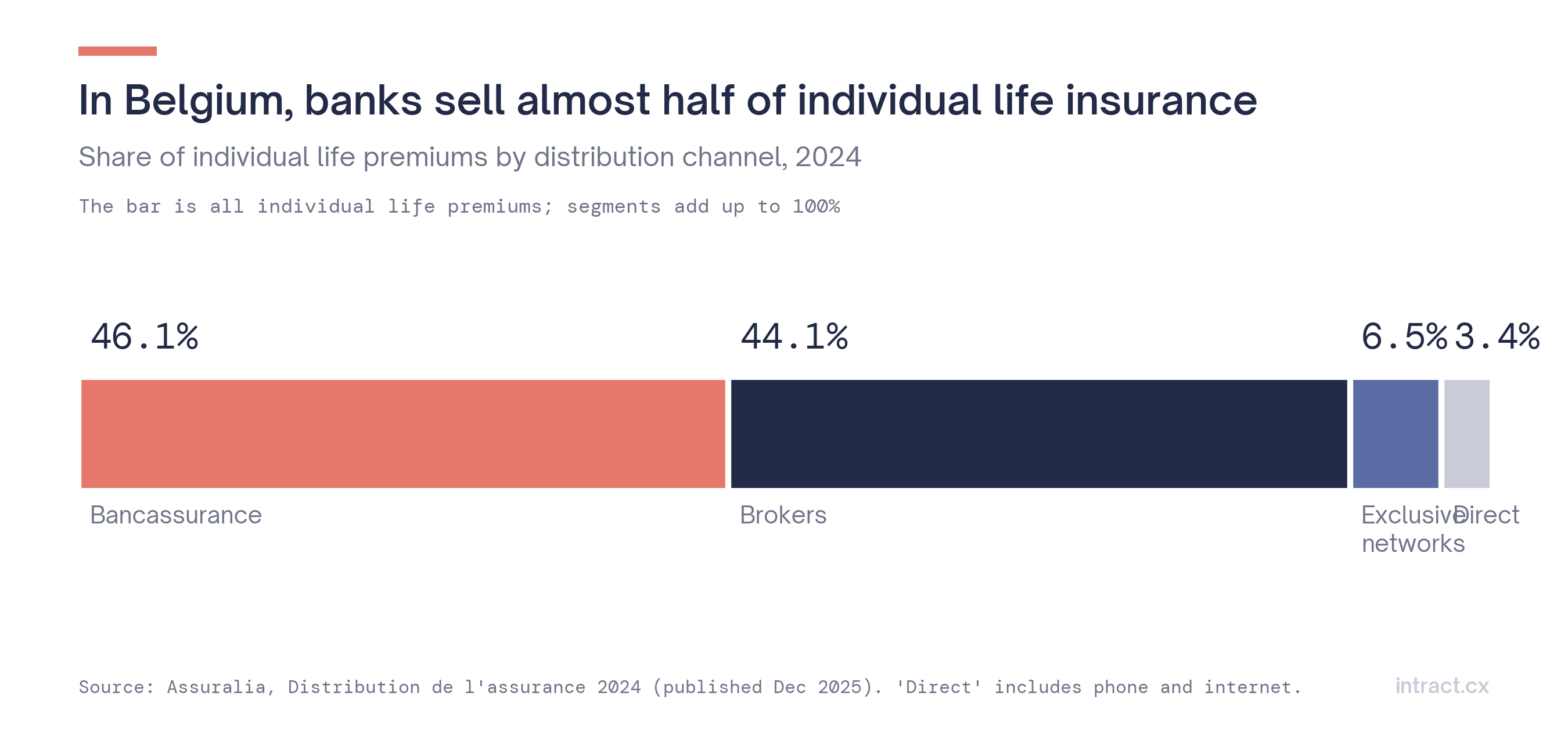 Figure 4. Individual life premiums by channel, Belgium, 2024.
The FSMA has been active on product value. According to press coverage of its 2025 annual report, its value-for-money reviews since 2022 led 234 insurance products to be adjusted, about a third of them withdrawn. Among non-life products with a claims ratio below 30%, 50 of 56 reviewed products were withdrawn. The FSMA has also fined a retailer whose staff selling ancillary insurance had not passed the required knowledge tests.
The common thread: supervisors increasingly ask firms to show not just that a process exists, but that it is applied, sale by sale.
4. The checklist: what to verify on every insurance sales call
Turn the rules into questions an evaluator, human or automated, can answer with OK / not OK and a quote.
| # | Check | Rule it supports | Typical failure |
|---|---|---|---|
| 1 | Agent identifies themselves and the firm, and the capacity in which they act | IDD Art. 19 | Skipped in outbound calls |
| 2 | (France) Consent to continue and recording disclosed at the start | French canvassing rules | Said after the pitch starts |
| 3 | Customer's needs and situation asked before the product is presented | IDD Art. 20 | Needs inferred, never asked |
| 4 | Optional nature stated: the loan does not require this insurance | IDD Art. 24 | "It comes with the loan" |
| 5 | Monthly or total cost stated clearly | IDD Art. 19–20, distance rules | Only the daily cost given |
| 6 | Main exclusions and waiting periods mentioned | IPID content | Exclusions left to the documents |
| 7 | Withdrawal / cooling-off period mentioned with its duration | Directive 2023/2673, Solvency II Art. 186 | Not mentioned at all |
| 8 | Documents sent on a durable medium, and the agent says so | IDD Art. 23(7) | No confirmation |
| 9 | Customer hesitation or misunderstanding is addressed, not pushed through | IDD Art. 17 | "Let's just put it in place" |
| 10 | (France) No signature during the call or within 24 hours | French canvassing rules | Signature collected live |
Two items deserve special attention because they are the hardest to verify on a sample: #3 (needs before product) depends on the order of the conversation, and #9 (hesitation) is a judgement about the customer, not the agent's script. Both are invisible in the CRM and only exist in the call.
5. From checklist to evidence
A checklist proves nothing if it is applied to 2–5% of calls (see our article on QA sampling). What an auditor or a supervisor will ask is: on what share of sales was each item respected, by which team, over which period, and can you show the calls where it was not?
That requires three things:
- Every sales call scored, item by item.
- The transcript one click away for each score, so a reviewer can verify in seconds.
- Rates by question, team and period, so you fix the specific gap (for example, the cooling-off mention) rather than "compliance" in general.
How Intract supports this
In Intract, your script becomes a no-code workflow. A structured AI step answers each checklist question OK or not OK in a single pass, with the transcript one click away; aggregation steps compute the compliance rate and the number of misses per call; the results are typed columns (✓/✗, numbers) you can filter, group and chart by team and period. A separate AI judgement can flag customer hesitation. You test the grid on recent calls and mark each answer right or wrong before publishing, so you know its accuracy on your own conversations. Every workflow run is logged.
In a pilot with a European consumer-credit lender, Intract checked an eight-question insurance sales script on 100% of calls, with customer hesitation flagged and a dashboard of conformity by question.
Calls arrive natively from Aircall and Vonage, or from any recording system through the API. Data is hosted in the EU.
FAQ
Is the demands-and-needs test a phone-specific obligation? No. IDD Art. 20 applies to all distribution channels. On the phone, the risk is that it is skipped or done after the pitch.
Do we need to record insurance sales calls? In France, the insurance canvassing rules require informing the customer of the recording and keeping it for two years when a contract is concluded. Elsewhere, check your national rules.
Can we use our own wording for the checks? Yes: the grid is your script, in your words. Test it on your own calls before going live.
Methodology and sources
All figures are taken from the sources below; none are Intract estimates. EIOPA percentages are 3-year averages for 2018–2020. "Remainder" in Figure 2 is the share of the euro EIOPA does not allocate.
- Directive (EU) 2016/97 (IDD), EUR-Lex
- Directive (EU) 2023/2673, EUR-Lex
- Directive 2009/138/EC (Solvency II), Art. 186
- EIOPA, Thematic review on credit protection insurance sold via banks (Oct 2022)
- FCA, PPI complaints deadline final report (Apr 2020)
- Assuralia, Distribution de l'assurance 2024
- Business AM, FSMA annual report coverage (Jun 2025)
- INC, Réforme du courtage : démarchage téléphonique en assurance
- DGCCRF, Règles du démarchage téléphonique (2026)