
TL;DR
In collections, vulnerability rarely arrives as a formal disclosure, so it has to be detected from cues in the conversation. The FCA found that 49% of UK adults, 26.4 million people, had at least one characteristic of vulnerability in 2024, yet in one survey only 14% of people with a mental health problem had told their financial firm. In a 2010 study, 7 in 10 collections staff wanted training on mental health. CCD2 requires early detection of consumers in financial difficulty from 20 November 2026. This guide covers how common vulnerability is, debt and mental health, the disclosure gap, the legal requirements and a process from cues to outcomes.
A customer in arrears rarely opens a call with "I am vulnerable". They say they have been in hospital, that their partner left, that they cannot think straight at the moment, that they are sorry, again. Whether the agent hears it, records it and adapts what happens next decides whether the payment plan holds, whether a complaint follows and, increasingly, whether the lender meets its legal obligations.
This article follows our piece on categorising collections call reasons. It focuses on one cross-cutting flag: vulnerability.
Key figures
| Figure | Value | Source |
|---|---|---|
| UK adults with characteristics of vulnerability, 2024 | 49% (26.4m) | FCA Financial Lives 2024 |
| People in problem debt who have a mental health problem | 46% (vs 17% of others) | Money and Mental Health Policy Institute |
| People with a mental health problem who told their financial firm | 14% | MMHPI & Money Advice Trust (n = 5,001) |
| Collections staff who say they want training on mental health | 7 in 10 | Davey & Fitch (1,270 staff, 2010) |
| Clients identified as financially fragile by French banks, end 2025 | 4.8m (+5.1%) | Banque de France, Observatoire de l'inclusion bancaire |
| Belgians unable to face an unexpected expense, 2024 | 21.6% (EU 30.0%) | Eurostat EU-SILC |
| Date CCD2 early-detection duty applies | 20 November 2026 | Directive (EU) 2023/2225 |
1. What "vulnerable" means
The most developed regulatory framework is the UK's. The FCA's guidance FG21/1 defines a vulnerable customer as someone who, because of their personal circumstances, is especially susceptible to harm, particularly when a firm does not act with appropriate care. It groups the drivers into four families:
| Driver | Examples (FCA) | What it can sound like on a call |
|---|---|---|
| Health | Physical or mental health condition, disability, addiction, caring responsibilities | "I've been on sick leave", "I'm on medication", "I look after my mother" |
| Life events | Bereavement, job loss, relationship breakdown, income shock, domestic abuse | "Since my husband died", "I lost my job in March" |
| Resilience | Low or unstable income, low savings, over-indebtedness, low emotional resilience | "I have other loans", "I don't know how I'll pay the rent" |
| Capability | Low financial knowledge, literacy, language or digital skills, cognitive difficulties | "I don't understand the letter", "Can you explain again?" |
The FCA expects firms to understand their customers' needs, give staff the skills to recognise them and encourage disclosure, design services and systems that let people disclose and that record needs, and monitor outcomes. Its 2025 review of 725 firms found that vulnerable customers may still not consistently get outcomes as good as other customers, and confirmed the guidance remains valid alongside the Consumer Duty.
2. How common it is
The FCA's Financial Lives survey found that 49% of UK adults, 26.4 million people, had at least one characteristic of vulnerability in May 2024, down from 52% in 2022.
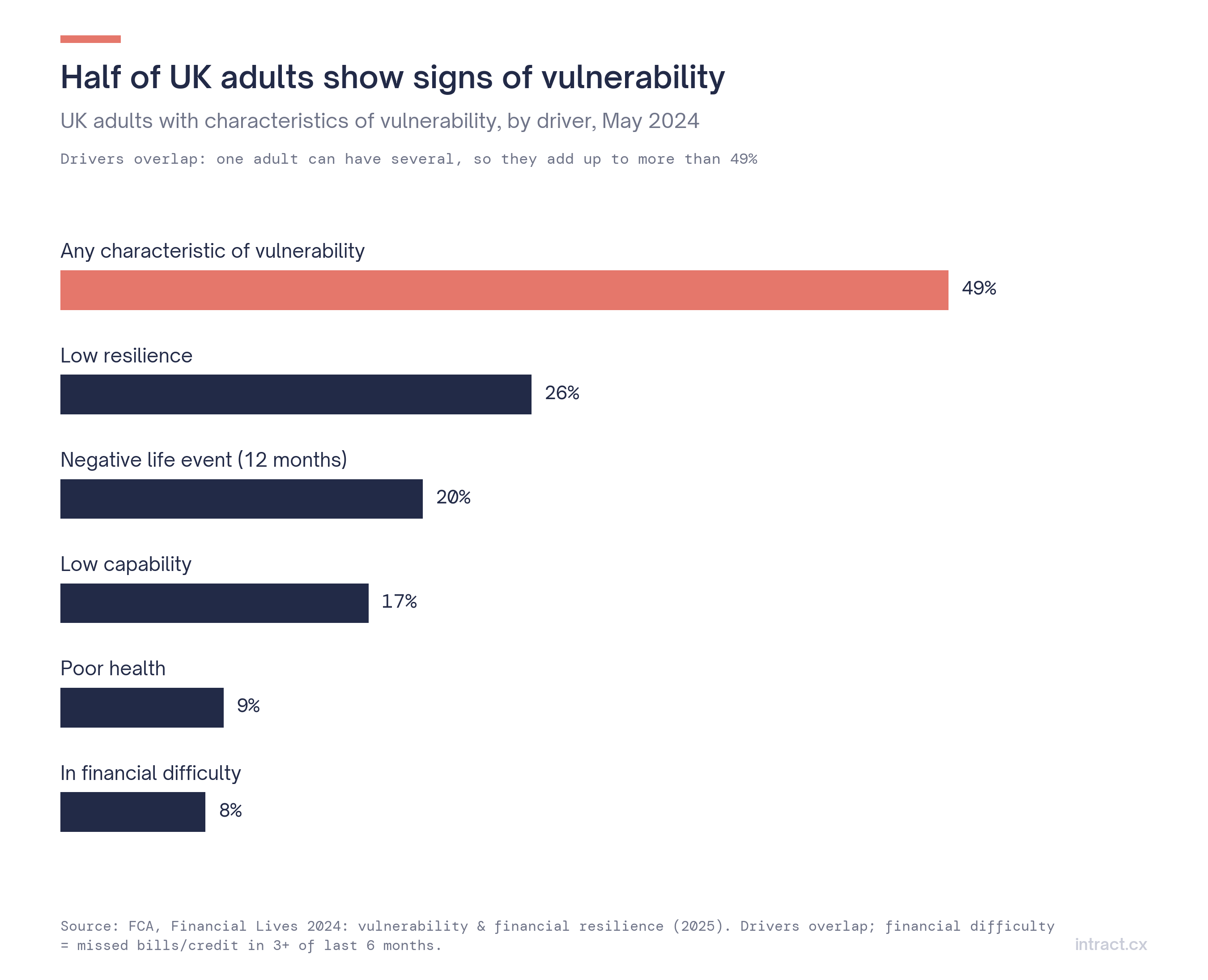 Figure 1. UK adults with characteristics of vulnerability, by driver (drivers overlap).
Low resilience (26%) and a negative life event in the past year (20%) are the most common drivers, followed by low capability (17%) and poor health (9%). 8% were in financial difficulty, meaning they had missed bills or credit payments in at least three of the last six months.
There is no equivalent EU-wide measure, but the economic pressure indicators point the same way. Eurostat finds that 21.6% of Belgians could not face an unexpected expense in 2024, against 30.0% across the EU, and 5.0% were in arrears on housing, utility bills or loans (9.2% EU). In France, banks identified 4.8 million financially fragile clients at end 2025, up 5.1%.
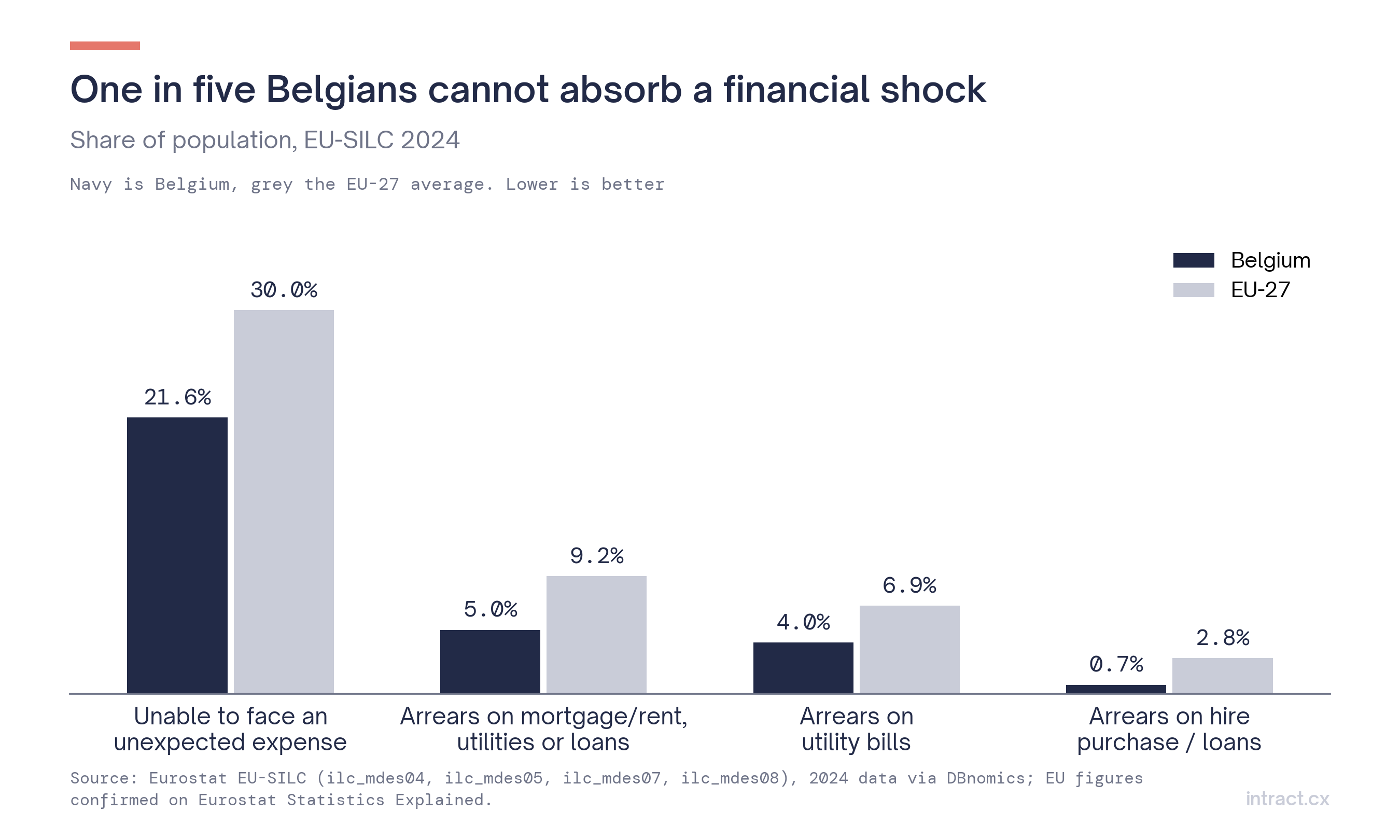 Figure 2. Financial strain indicators, Belgium vs EU-27, 2024.
In a collections queue, the share is necessarily higher: by definition, these are customers who have already fallen behind.
3. Debt and mental health
The link between problem debt and mental health is one of the best documented. Analysis of England's Adult Psychiatric Morbidity Survey by the Money and Mental Health Policy Institute found that 46% of people in problem debt also have a mental health problem, against 17% of people without problem debt. People with a mental health problem are three and a half times as likely to be in problem debt (18% vs 5%).
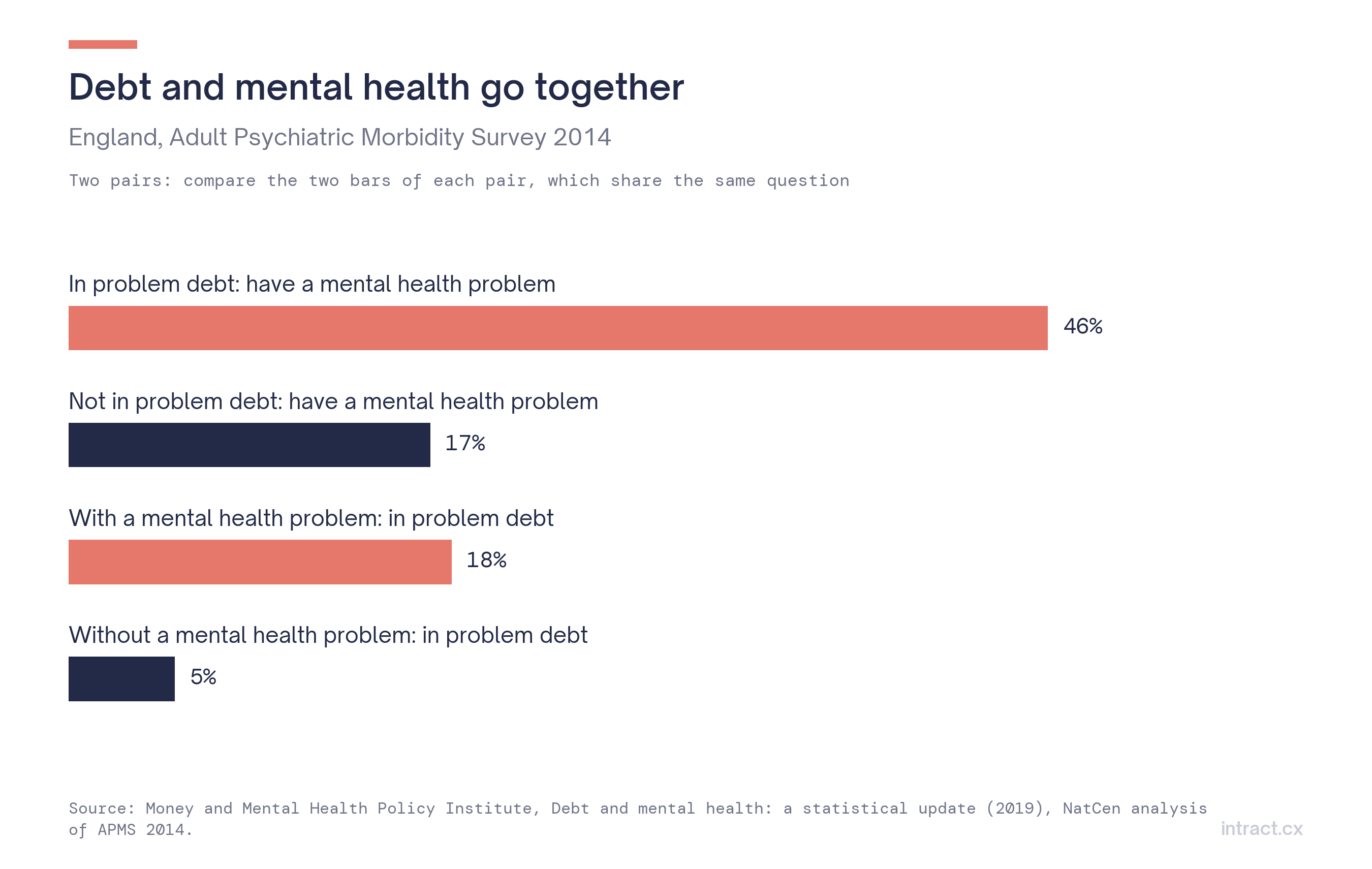 Figure 3. Debt and mental health, England (APMS 2014).
For collections, this means that a large share of the customers on the phone may struggle to process information, plan, or deal with pressure, and that the way a call is conducted can make the situation better or worse.
4. The disclosure gap
The difficulty is that customers rarely say it in so many words. In a survey of 5,001 people with mental health problems, only 14% had told their financial services firm; 28% did not think it would make a difference and 12% feared they would not be believed. The FCA's 2025 consumer research found that around four in ten consumers in vulnerable circumstances had told their provider. And a 2026 StepChange survey found that 44% of people with problem debt had told no one at all.
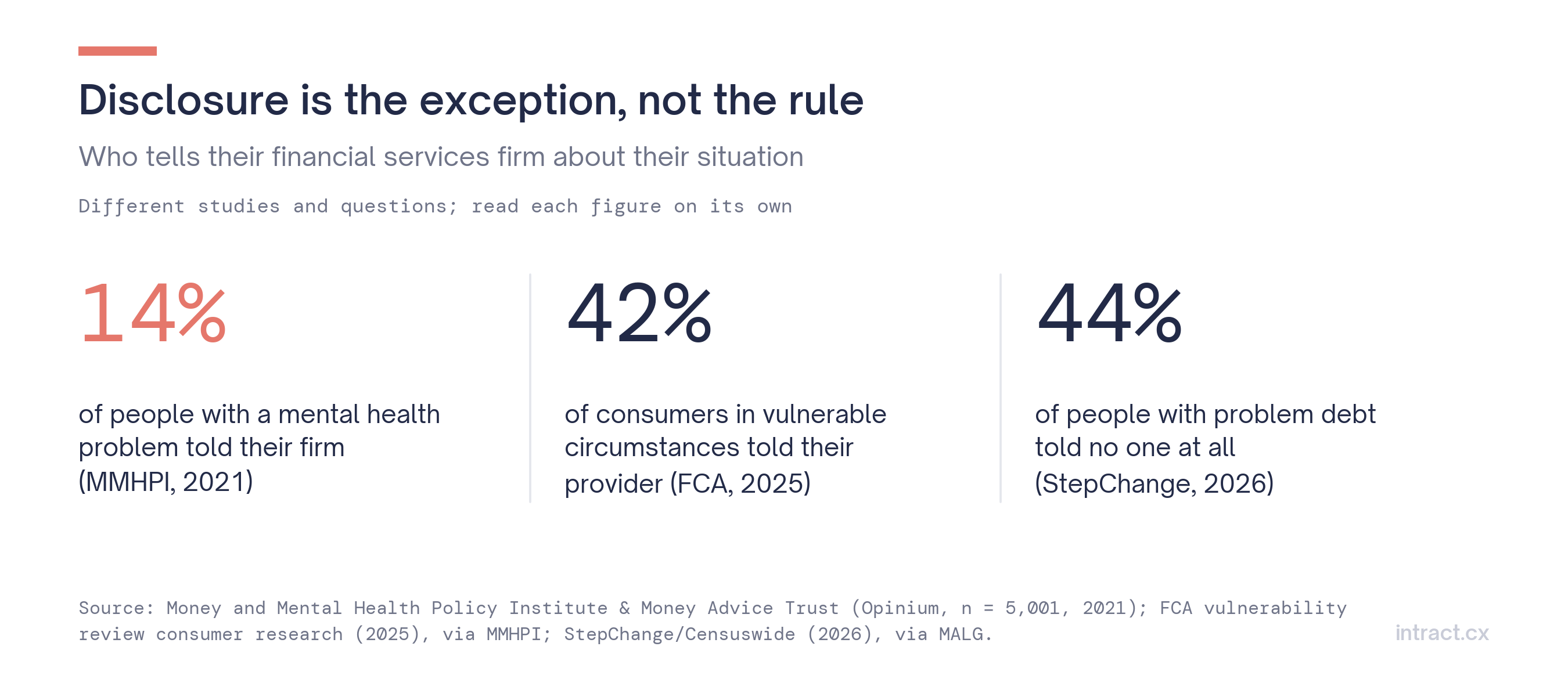 Figure 4. Disclosure is the exception, not the rule (different studies and populations).
These figures measure different populations and are not directly comparable, but they agree on the essential point: a formal disclosure is the exception. Vulnerability more often surfaces as cues in the conversation: a mention of hospital, a bereavement, confusion about a letter, distress in the voice. A 2010 study for the Royal College of Psychiatrists put it vividly: across UK creditors, a customer disclosed a mental health problem to collections staff every 30 seconds.
5. Agents want help
The same study surveyed 1,270 collections staff at 19 creditors. 7 in 10 wanted training on mental health, 69% said their organisation had no clear mental health policy, 57% called the topic "a minefield", 44% said they did not know enough and a third found it hard to talk about.
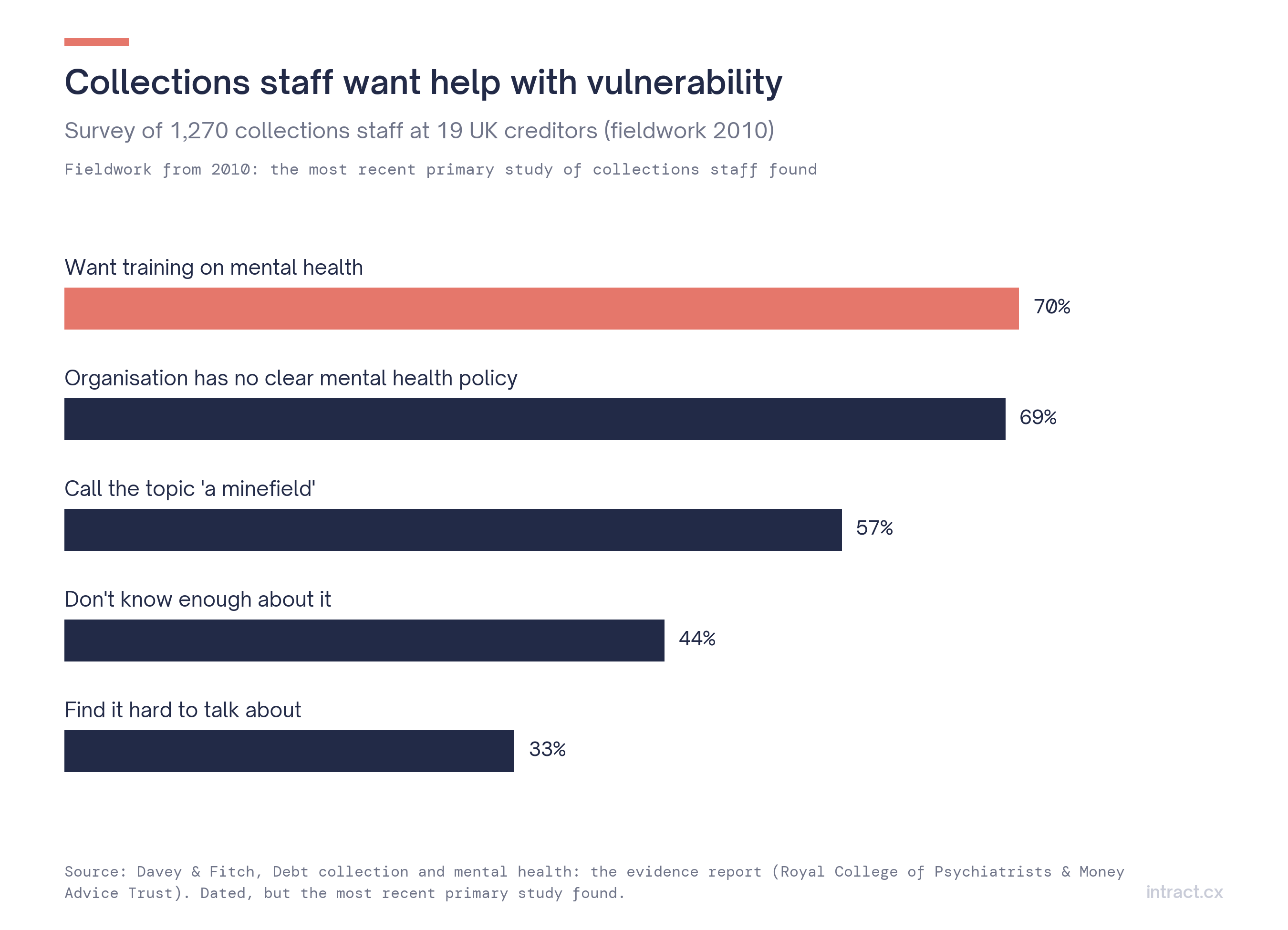 Figure 5. Collections staff and mental health (fieldwork 2010, the most recent primary study we found).
Practitioner protocols exist. The Money Advice Trust and the Royal College of Psychiatrists developed TEXAS for frontline staff (FCA Occasional Paper 8 practitioners' pack): Thank the customer, Explain how the information will be used, get eXplicit consent, Ask three questions (does it affect repayment, does it affect communication, is there someone who helps), Signpost to support. IDEA (Impact, Duration, Episodes, Assistance) guides specialist teams.
Protocols work when they are triggered. The hard part is noticing the cue in the first place, on every call, at the end of a long shift.
6. What the law now requires in the EU and Belgium
- CCD2. From 20 November 2026, the Consumer Credit Directive (EU) 2023/2225 applies. Article 35 requires reasonable forbearance before enforcement, taking the consumer's circumstances into account. Article 36(2) requires creditors to have processes and policies for the early detection of consumers in financial difficulty and to refer them to debt advice. The recitals ask creditors to deal proactively with emerging credit risk at an early stage.
- EBA. The EBA guidelines on arrears and foreclosure (mortgage credit) already ask for procedures to detect payment difficulties as early as possible and adequate training for staff dealing with consumers in difficulty.
- Belgium. Since 2023, amicable recovery of consumer debts falls under Book XIX of the Code of Economic Law: a free first reminder, a 14-day period before any charges, capped damages, and no calls or visits between 22:00 and 08:00, on top of the general ban on aggressive practices.
"Early detection" and "taking circumstances into account" cannot be evidenced from a wrap-up code. They need to be evidenced from what the customer said.
7. From cues to a process
| Step | What it means | Evidence produced |
|---|---|---|
| 1. Define the cues | Your list of signals per FCA driver, in your customers' words and languages | A written, versioned definition |
| 2. Flag every call | Each call checked for cues, with the quote that triggered the flag | Flag + quote on the record |
| 3. Alert a specialist | Flagged calls routed to a trained team the same day | Alert log |
| 4. Adapt the treatment | Forbearance options, communication preferences, debt advice referral | Measure offered vs circumstances |
| 5. Monitor outcomes | Plan kept, complaints, re-defaults for flagged vs other customers | Outcome comparison (FCA, CCD2) |
Two safeguards are essential. A flag is a prompt for a human, not a decision: the specialist confirms, asks with care (TEXAS) and decides. And health information is special category data under GDPR Art. 9: recording it needs a lawful basis and an additional condition, and customers generally expect explicit consent. The UK regulators recently confirmed that data protection law does not stop firms from delivering good outcomes for vulnerable customers, and recommend a data protection impact assessment. In the EU, check the Art. 9 conditions available in your Member State with your DPO.
How Intract supports this
Intract analyses every collections call it receives (natively from Aircall or Vonage, or through its API). Each interaction gets a summary, business impact, sentiment, urgency and churn risk. Your vulnerability cues can be encoded as a no-code workflow: a structured AI step checks each call against your definition per driver (health, life events, resilience, capability), returns yes or no per driver, with the transcript one click away, and a Microsoft Teams alert notifies the specialist team. You test the definition on recent calls and mark each answer right or wrong before publishing, so you get an accuracy score per column on your own conversations. The same workflow can capture the reason for arrears and whether debt advice was mentioned, and dashboards compare flagged and non-flagged customers over time. Every workflow run is logged, and data is hosted in the EU with retention you configure.
Intract flags the cues with the evidence; decisions about the customer stay with your trained team.
FAQ
Can AI decide that a customer is vulnerable? It should not. It can flag cues with the evidence, so a trained person confirms and adapts the treatment.
Is detecting vulnerability required in the EU? CCD2 requires early detection of consumers in financial difficulty and forbearance that takes their circumstances into account, from 20 November 2026. How your national transposition defines this is a question for your legal team.
What about GDPR? Health information is special category data. Define the lawful basis and Art. 9 condition, run a DPIA, and restrict access to those who need it.
Methodology and sources
UK figures are used because the UK has the most detailed public data on vulnerability; they illustrate patterns, not EU prevalence. Disclosure figures come from different studies and populations and are shown separately. The collections staff survey dates from 2010. Several FCA review figures and the CCD2 article texts were read via secondary sources (noted below) and should be checked against the originals before citing in legal documents.
- FCA, FG21/1 Guidance on the fair treatment of vulnerable customers (2021); Financial Lives 2024: vulnerability & financial resilience; Firms' treatment of customers in vulnerable circumstances (2025); Occasional Paper 8 practitioners' pack; Joint FCA–ICO statement (2026)
- Money and Mental Health Policy Institute, Debt and mental health: a statistical update (2019); Mental health disclosure press release (2022); Takeaways from the FCA's vulnerability review
- MALG, StepChange research, Debt Awareness Week 2026
- Davey & Fitch, Debt collection and mental health: the evidence report (Royal College of Psychiatrists & Money Advice Trust)
- Eurostat, Quality of life indicators: economic security; EU-SILC ilc_mdes04/05/07/08 (2024 data, read via DBnomics)
- Banque de France, Observatoire de l'inclusion bancaire, rapport 2025
- Directive (EU) 2023/2225, EUR-Lex; Art. 35, Art. 36, Art. 48 (third-party mirrors)
- EBA, Guidelines on arrears and foreclosure, consolidated
- Lexgo, New rules on consumer debt collection in Belgium; Médiation de dettes, Position paper Livre XIX (2026)