
TL;DR
Spoken complaints rarely reach the complaint register, although EU and UK rules define a complaint as an expression of dissatisfaction whatever the channel. On the phone, the agent fixes the issue, picks a wrap-up code for the topic, and the complaint disappears. Yet the signal is rare: only 22–41% of consumers complained even once about their most serious problem (CCMC). And unregistered complaints escalate: in France, 55% of 36,540 insurance mediation referrals in 2024 were inadmissible, mostly because the customer had skipped the insurer's own complaints process. This guide covers what counts as a complaint, why phone complaints fall through the cracks and how to close the gap.
A customer calls about a refund and says, halfway through: "This is the third time I've called, I'm going to write to the ombudsman." The agent solves the refund question, picks the wrap-up code refund enquiry, and moves on. Under the rules that apply to most European financial firms, that customer has just made a complaint. In most complaint registers, they have not.
Key figures
| Figure | Value | Source |
|---|---|---|
| EU definition of a complaint | "A statement of dissatisfaction", with no channel restriction | EIOPA (2012), ESMA/EBA Joint Committee (2018) |
| UK definition | "Any oral or written expression of dissatisfaction" | FCA Handbook |
| Consumers who complained about their most serious problem | 22–41% | CCMC / Goodman, multi-country studies |
| Consumers who gave feedback after a very poor experience | 32% (down 7.7 pts since 2021) | Qualtrics XM Institute 2024 (vendor) |
| Complaints received by UK financial firms, 2025 | ~3.57m (H1 1.83m + H2 1.74m) | FCA aggregate complaints data |
| New cases at the UK Financial Ombudsman, 2025/26 | 214,600 | Financial Ombudsman Service |
| Insurance mediation referrals in France, 2024 | 36,540 (+19%), 55% inadmissible | La Médiation de l'Assurance |
| Requests to Ombudsfin (Belgium), 2025 | 8,686 | Ombudsfin, via press coverage |
1. What counts as a complaint
The definitions are channel-neutral, and in the UK explicitly include oral complaints.
- Insurance (EU). EIOPA's Guidelines on complaints handling define a complaint as a statement of dissatisfaction addressed to an insurer about its contract or service. Nothing requires it to be written. Firms must register complaints internally, for example in a secure electronic register.
- Banking, investment, payments (EU). The ESMA/EBA Joint Committee Guidelines use the same definition and the same registration requirement, and since 2018 also cover mortgage credit and payment institutions.
- UK. The FCA Handbook defines a complaint as any oral or written expression of dissatisfaction, justified or not, that alleges loss, distress or inconvenience.
So the standard is not "the customer filled in a form". It is "the customer expressed dissatisfaction". Phone calls are where most of that is expressed and where it is easiest to miss.
2. Most dissatisfaction is never voiced formally
Research on complaint behaviour points the same way across countries and decades:
- CCMC's studies with John Goodman found that only 22–41% of consumers complained even once about their most serious problem.
- Qualtrics XM Institute's 2024 study of more than 23,000 consumers found that only 32% gave feedback to the company after a very poor experience, down 7.7 points since 2021.
- New Zealand's financial regulator found that only 5% of consumers had ever complained about a financial provider, while 7% had wanted to and didn't.
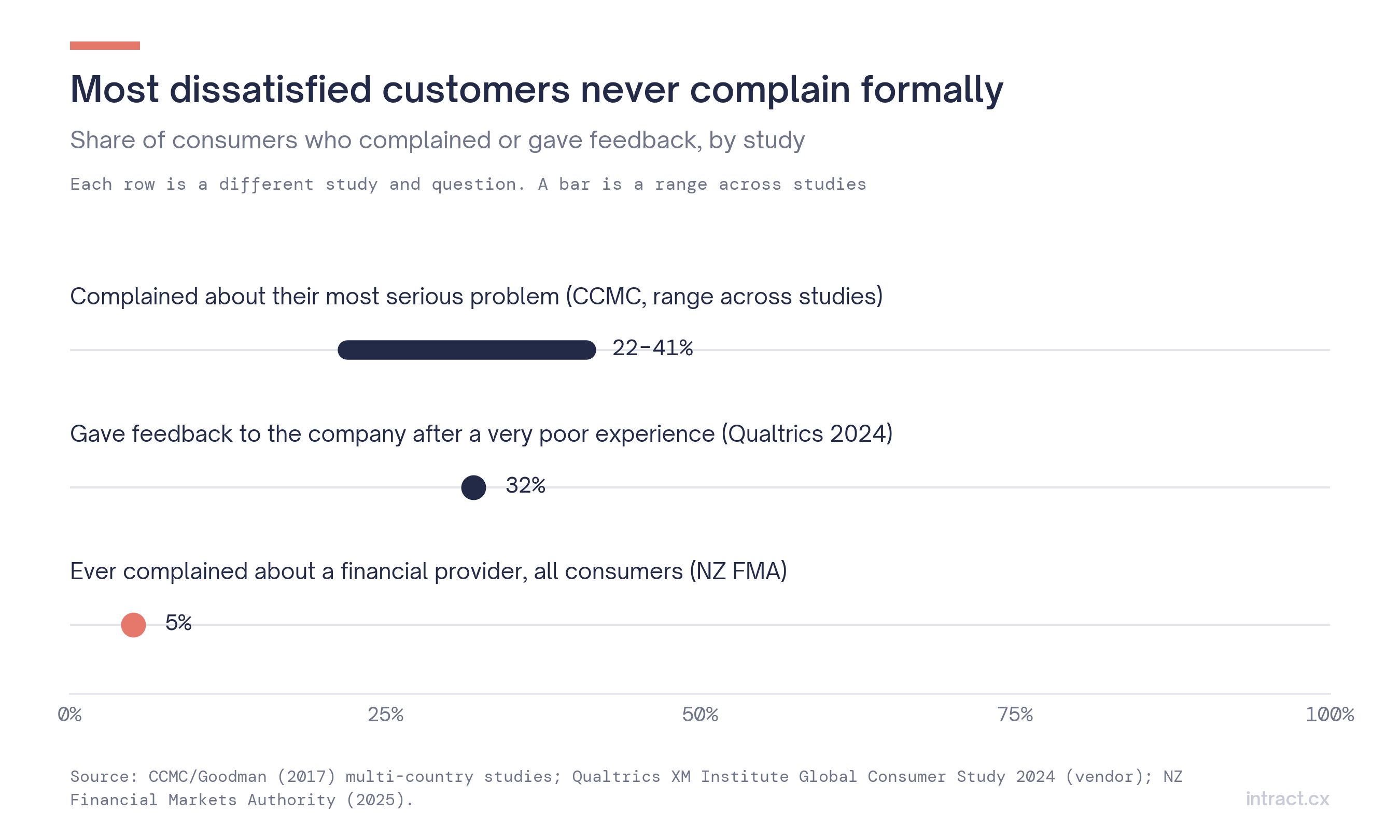 Figure 1. Most dissatisfied customers never complain formally.
You may have seen the claim that "only 1 in 26 unhappy customers complain". It is widely attributed to TARP research, but we could not find the original document, so we do not use it.
The implication for a contact centre: when a customer does voice dissatisfaction on the phone, it is a rare signal. Losing it in a wrap-up code wastes the one moment the customer told you.
3. Where unregistered complaints go
They do not disappear. Some customers leave. Others escalate.
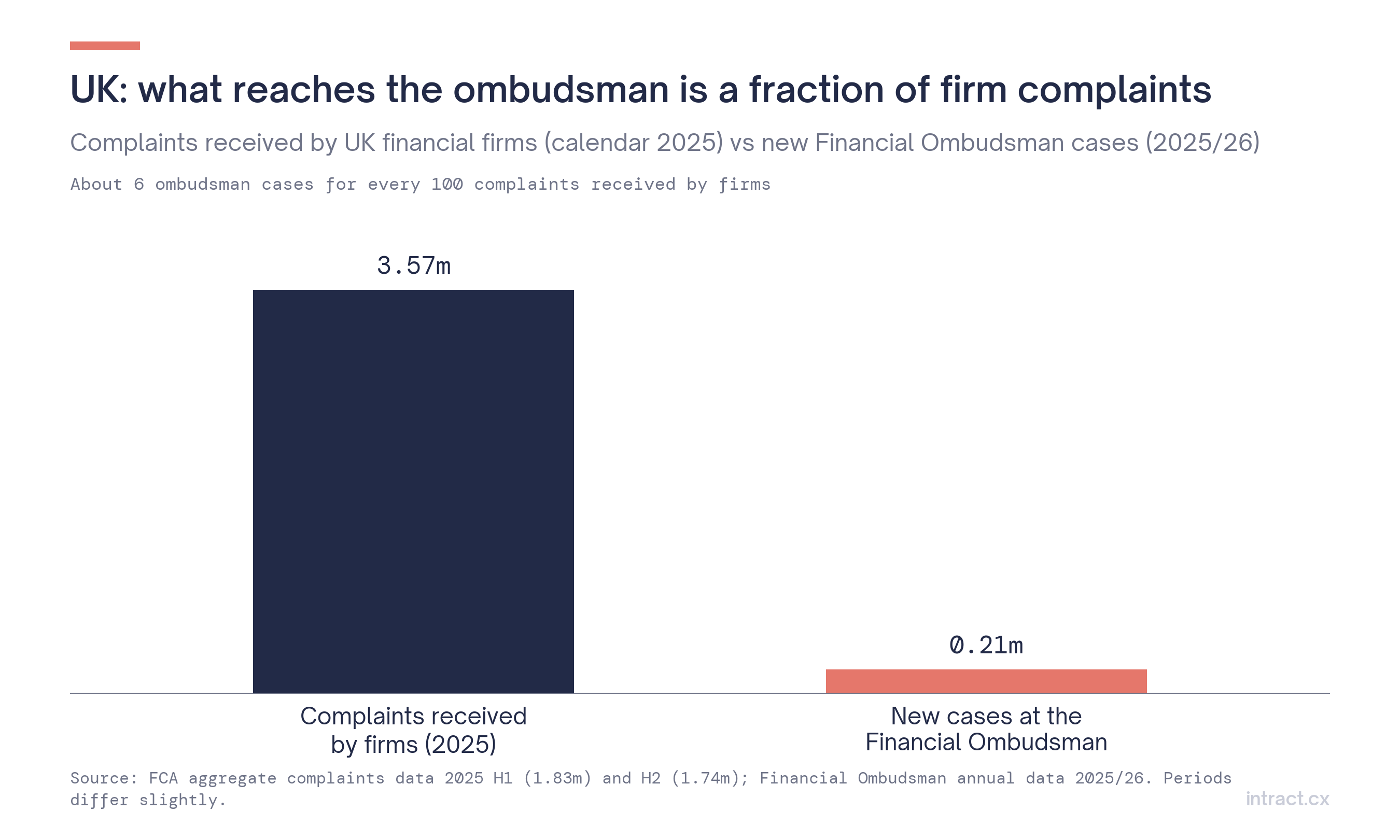 Figure 2. UK: complaints received by firms in 2025 vs new Financial Ombudsman cases in 2025/26.
In the UK, financial firms received 1.83m complaints in the first half of 2025 and 1.74m in the second. The Financial Ombudsman received 214,600 new complaints in 2025/26, roughly 6% of the firm-level volume (periods differ slightly), and upheld 30% on average. Each case costs the firm a fee of £650 in 2025/26, rising to £680 in 2026/27 according to the published budget, before any redress.
In France, La Médiation de l'Assurance received 36,540 referrals in 2024, up 19%. 55% were inadmissible, mostly because the customer had not first gone through the insurer's own complaints process.
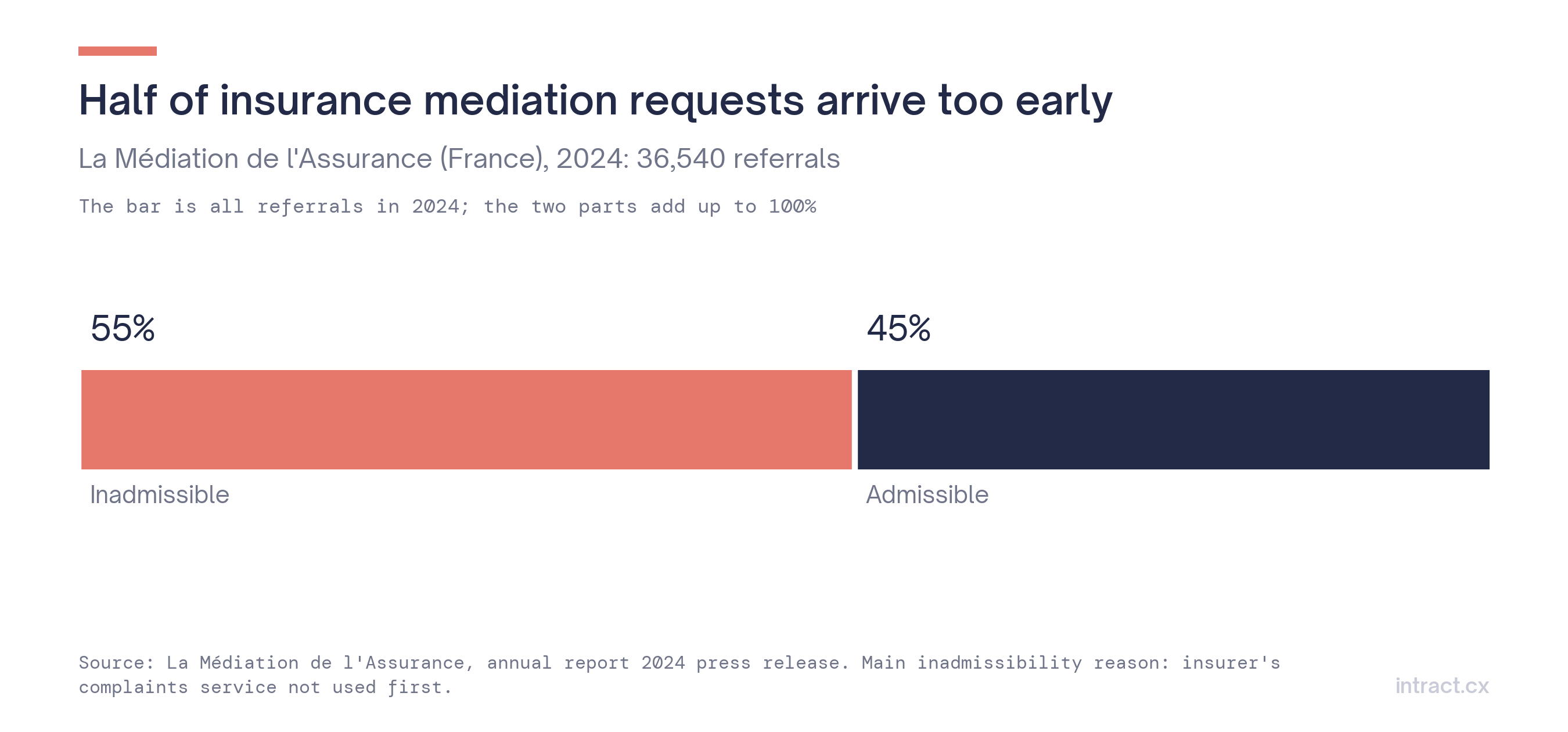 Figure 3. More than half of French insurance mediation requests skipped the insurer's complaints process.
Read that the other way round: thousands of customers felt they had complained, or did not know how to, and went straight to the mediator. Some of them will have said so on the phone first.
In Belgium, Ombudsfin received 8,686 requests in 2025, of which 2,422 were admissible, and the wider Belgian ombudsman network handled more than 117,000 questions and complaints.
4. Why phone complaints fall through the cracks
Regulators have documented the mechanics, if not the exact share.
- The agent fixes the issue and moves on. Until 2015, UK firms only reported complaints not resolved by the end of the next business day. The FCA then required all complaints to be reported, including those resolved quickly. Quickly resolved complaints are typically the phone ones.
- The definition is applied narrowly. The FCA's 2014 thematic review found weaknesses in identifying and recording complaints, and told firms to check whether their systems could inhibit accurate recording and to train staff on the definition.
- The topic hides the signal. A call about a refund delay is logged as a refund call. The dissatisfaction is in the tone and the words, not the topic.
- Nobody listens to most calls. Manual QA reviews 2–5% of interactions (see our QA sampling article). The FCA's 2024 good-practice note on root-cause analysis suggests firms listen to a sample of calls where customers seemed confused or dissatisfied, precisely because complaints data alone is incomplete.
5. Closing the gap: a practical approach
- Separate topic from signal. Classify what the call is about and, independently, whether the customer expressed dissatisfaction.
- Write down your definition. Use the regulatory one as a base, then add explicit triggers: mention of an ombudsman or mediator, a lawyer, the press, a repeated contact, a request for compensation.
- Flag every candidate call, with the quote. A complaints officer should be able to confirm or reject in seconds.
- Alert the right team the same day. Response deadlines start when the complaint is made, not when someone finds it.
- Reconcile. Compare flagged calls with registered complaints each month. The gap is your under-recording rate.
How Intract supports this
Every interaction Intract analyses gets a summary, business impact, sentiment, urgency and churn risk. Complaints are detected and surfaced on the customer profile, in filters, dashboards and Teams alerts, so a "refund enquiry" that contains a complaint does not disappear under its topic. You can encode your own complaint definition in a no-code workflow (for example "ombudsman or mediator mentioned" or "third contact on the same issue"), test it on recent calls, and send a Microsoft Teams alert to the complaints team when it fires. For complaints and urgent calls, Intract also proposes an action plan with a draft reply for the agent to copy into their own tools. Recurring causes appear in the cited reports, each claim linked back to the calls behind it.
Intract works alongside your complaint register and case-management tool. Calls arrive natively from Aircall and Vonage or through the API.
FAQ
Do oral complaints legally count? In the UK, explicitly yes. In the EU guidelines for insurance, banking and investment, the definition is a statement of dissatisfaction with no channel restriction. Check your national rules.
Will automatic detection flood our register with false positives? Treat detection as a candidate list for a human to confirm, and tune the definition on your own calls before going live.
Is the "1 in 26" statistic reliable? We could not find its primary source. Better-documented figures: 22–41% complained about their most serious problem (CCMC), 32% gave feedback after a very poor experience (Qualtrics, 2024).
Methodology and sources
The UK funnel compares calendar-year 2025 firm complaints (H1 + H2) with the Ombudsman's April 2025–March 2026 financial year; the ratio (~6%) is indicative. The FCA page describes the H2 change as a 0.4% decrease, which does not match 1.83m → 1.74m; we cite only the absolute figures. Belgian Ombudsfin figures come from press coverage of its annual report.
- EIOPA, Guidelines on complaints-handling by insurance undertakings (2012)
- ESMA/EBA, Joint Committee Guidelines on complaints-handling (2018)
- FCA, Handbook glossary: complaint; Aggregate complaints data 2025 H2; PS15/19 press release; Complaints and root cause analysis
- Financial Ombudsman Service, Annual complaints data 2025/26; case fee
- Regulation Tomorrow, FCA thematic review of complaint handling (2014); FOS 2026/27 plans and budget
- CCMC / Goodman, Quantifying the Impact of Service in Multiple Countries
- Qualtrics XM Institute, Global consumers share feedback (vendor research)
- NZ FMA, Why don't consumers complain? (2025)
- La Médiation de l'Assurance, Rapport annuel 2024, communiqué
- BX1, Ombudsfin 2025; Forum for the Future, Ombudsman network 2025