
TL;DR
Speech analytics finds things in recorded calls: words, phrases, silences, keyword counts. Conversation intelligence understands them: what the customer wanted, how they felt, whether a rule was followed and what should happen next, across voice and text. The shift has a measurable cause. Word error rate on conversational telephone speech fell from 18.5% in 2011 to 5.1–5.8% in 2017, against 5.9% for professional transcribers, and language models can now read a transcript as a person would. Benchmarks are not your contact centre, though. This guide covers the category's history, a side-by-side comparison, adoption data and five questions to choose a tool.
Both terms describe software that analyses customer conversations. The difference is in what comes out. Speech analytics was built to find things in recorded calls: words, phrases, silences, trends in keyword counts. Conversation intelligence is built to understand them: what the customer wanted, how they felt, whether a rule was followed, what should happen next, across voice and text.
The shift between the two is recent and has a measurable cause: transcription became accurate enough, and language models capable enough, to read a conversation the way a person would.
Key figures
| Figure | Value | Source |
|---|---|---|
| Speech recognition word error rate on conversational phone speech, 2011 | 18.5% | Microsoft Research (Seide et al.) |
| Same benchmark, 2017 | 5.1–5.8%, vs 5.9% for professional transcribers | Microsoft Research (Xiong et al.) |
| Contact centres implementing speech analytics, 2016 → 2020 | 9.2% → 21.4% | Call Centre Helper surveys |
| Large operations using speech analytics for QA, 2022 | 79% | COPC benchmark |
| Speech analytics market, 2024 → 2029 (forecast) | $3.3bn → $7.3bn | MarketsandMarkets |
| Inbound + outbound voice share of contact-centre interactions, 2024 | ~68% | Call Centre Helper survey |
1. Two generations of the same idea
Speech analytics (2000s–2010s)
The first generation emerged in the early 2000s. Nexidia, built on Georgia Tech research into phonetic indexing, was founded in 2000 and acquired by NICE in 2016 for $135M, described at the time as an interaction analytics provider. CallMiner was founded in 2002; Utopy, another speech and text analytics vendor, was acquired by Genesys in 2013.
Two techniques dominated:
- Phonetic search matched sounds rather than words. It was fast, but blind to context: as a Verint expert explained in 2010, "cancel" and "can sell" sound essentially the same to a phonetic engine.
- Large-vocabulary speech-to-text produced transcripts, but error rates on real phone audio were high, so analysis relied on keyword and phrase spotting, then counting.
The output was typically a dashboard: how many calls mentioned "cancel" this week, how long the silences were, which agents talked over customers.
Conversation intelligence (late 2010s onwards)
Two things changed.
Transcription caught up with humans. On the Switchboard benchmark of conversational telephone speech, Microsoft reported an 18.5% word error rate in 2011. By 2017, IBM reached 5.5%, and Microsoft reported 5.8% against 5.9% for professional human transcribers, then 5.1%. In 2022, OpenAI's Whisper, trained on 680,000 hours of audio, was described as approaching human accuracy and robustness across many languages.
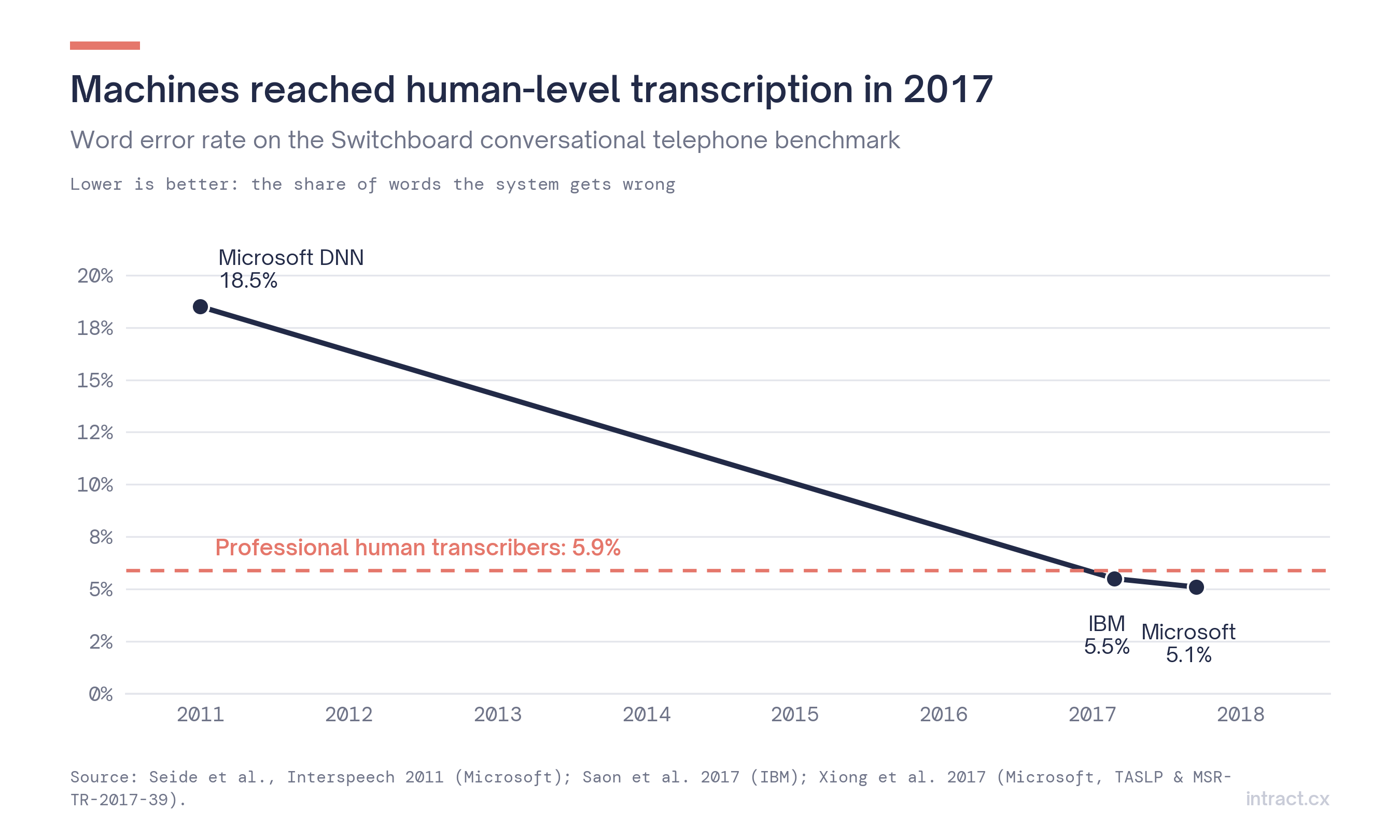 Figure 1. Word error rate on conversational telephone speech fell by roughly 70% between 2011 and 2017.
Benchmarks are not your contact centre: real calls have accents, noise and jargon, and results vary. But the order of magnitude changed, and with it what you could build on top.
Language models made transcripts readable by machines. With a reliable transcript, a model can answer questions a keyword list cannot: Did the customer accept the offer, or just say "OK"? Was the cooling-off period explained, even if the agent used different words? What is the real reason for the call?
The analysts followed. Forrester's Wave on conversation intelligence for customer service describes these tools as software that analyses speech and text conversations between agents and customers, including automated quality monitoring. Gartner now publishes a Market Guide for Conversation Analytics Platforms, about extracting insights from natural-language conversations across service channels.
2. Side by side
| Speech analytics | Conversation intelligence | |
|---|---|---|
| Core question | "Which calls contain X?" | "What happened, and what should we do?" |
| Input | Mostly voice recordings | Voice and text (chat, email, messaging) |
| Technique | Phonetic search, keyword spotting, acoustic metrics | Accurate transcription + language models + rules |
| Unit of output | Counts, hits, scores per keyword | Structured fields per conversation: reason, sentiment, outcome, compliance items, next action |
| Typical users | Analysts, QA specialists | Managers, QA, compliance, CX, product, leadership |
| Setup | Build and maintain keyword lists and queries | Describe categories and rules in plain language, test on real calls |
| Strengths | Acoustic signals (silence, overtalk), mature tooling | Meaning, context, multilingual, evidence with quotes |
| Weak spots | Context, synonyms, languages, false positives | Depends on transcription quality; outputs must be tested for accuracy |
Neither term is used perfectly consistently. Some vendors call LLM-based products "speech analytics", and some conversation intelligence tools do not measure acoustics at all. Ask what the product actually outputs.
3. Adoption: depends on who you ask
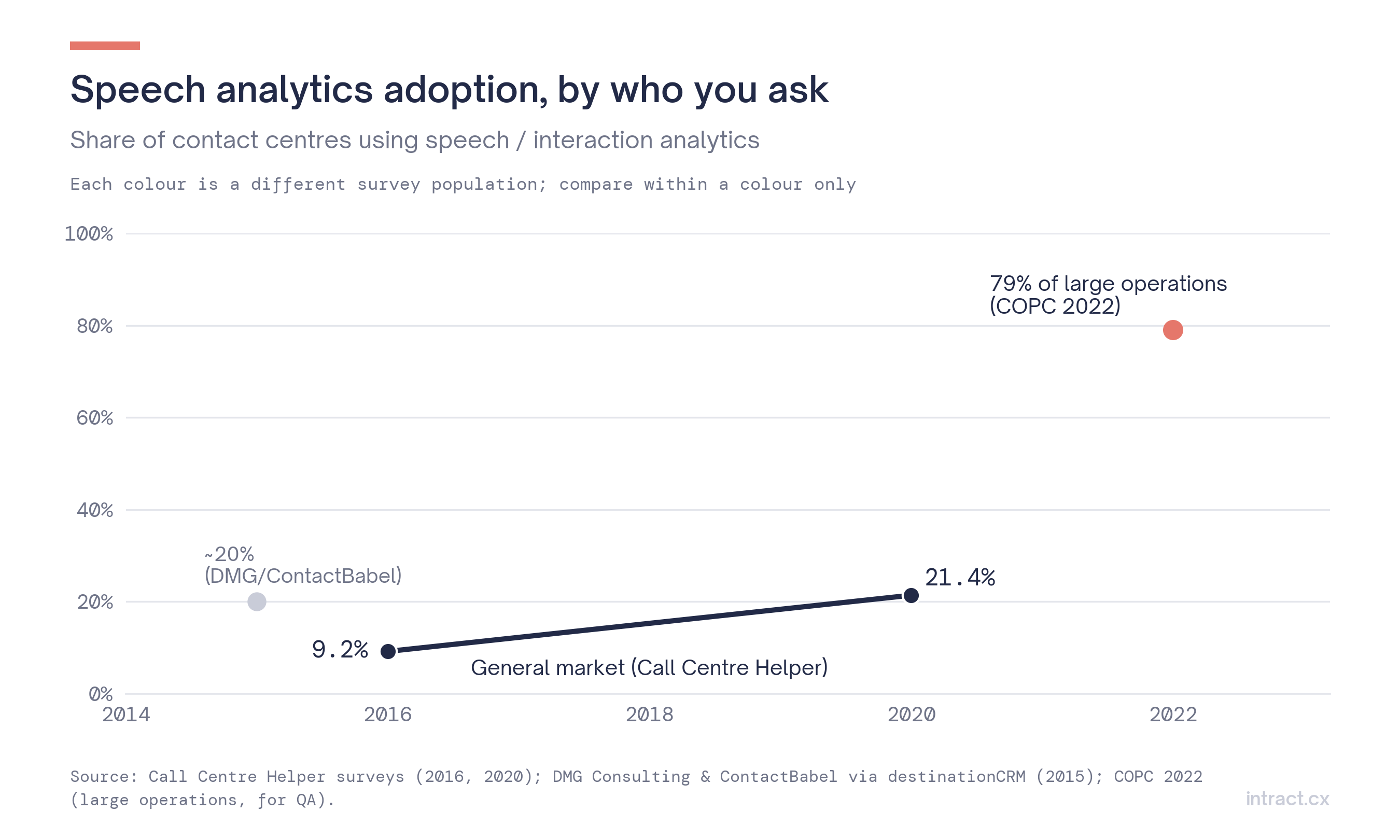 Figure 2. General-market surveys show around one in five contact centres; large operations are far ahead.
General-market surveys by Call Centre Helper show speech analytics implementation rising from 9.2% in 2016 to 21.4% in 2020. In 2015, DMG Consulting and ContactBabel put adoption of interaction analytics at just under 20%. COPC's 2022 benchmark of large, mature operations found 79% using speech analytics for QA. The gap mostly reflects the samples: large operations adopted early, the wider market much later.
The market keeps growing. MarketsandMarkets estimates the speech analytics market at $3.3bn in 2024, forecast to reach $7.3bn by 2029. Estimates for "conversation intelligence" vary widely between firms (from about $13bn to $24.5bn in recent reports) because they define the market differently; treat them with caution.
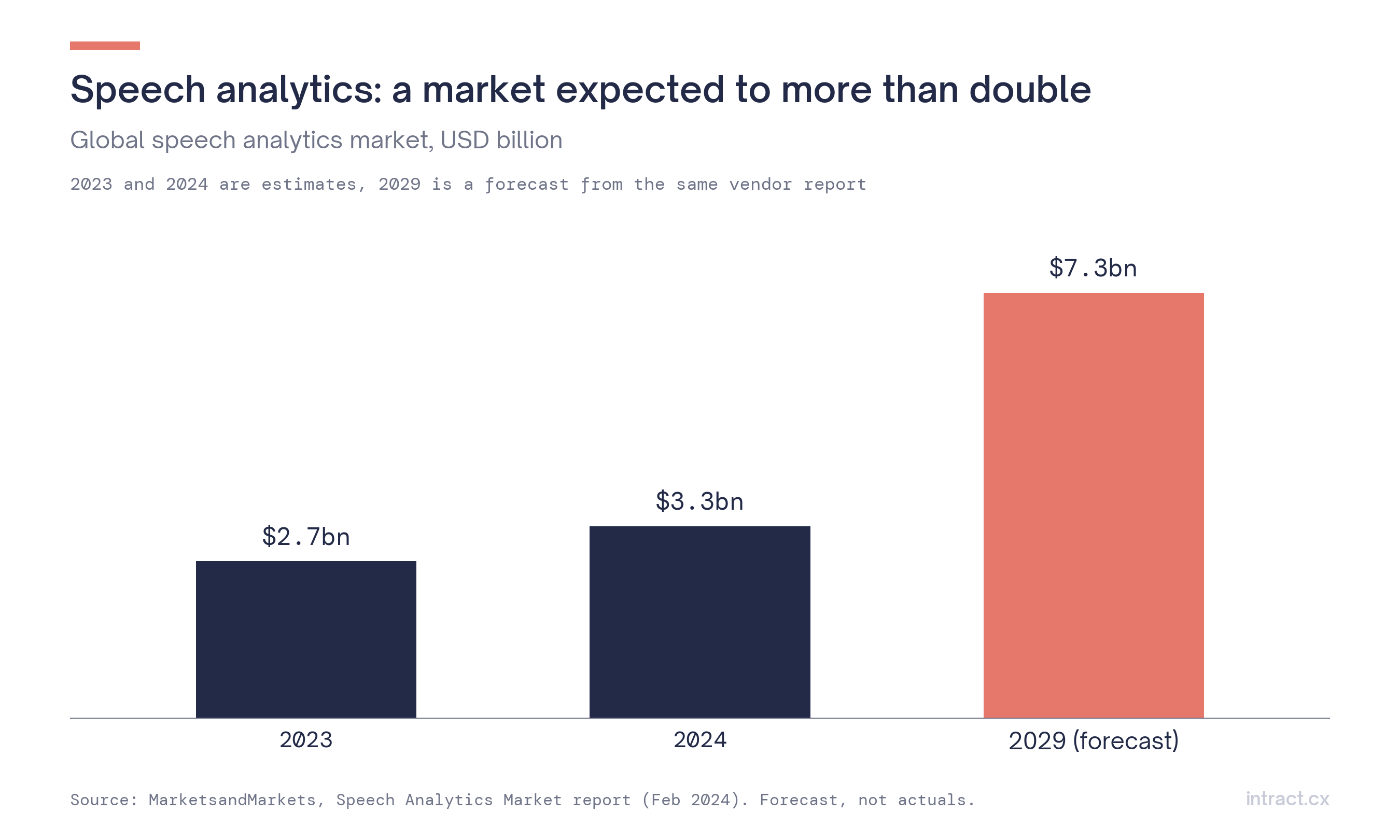 Figure 3. Speech analytics market, MarketsandMarkets estimates and forecast.
4. Voice is still where the volume is
The move to "conversation" does not mean the phone is fading. In Call Centre Helper's 2024 survey, inbound voice still represented over 53% of interactions and outbound 15%, against 17% for email and 7% for live chat. ContactBabel's US research shows phone preference for complex issues rising from 28% in 2018 to a peak of 47% in 2024.
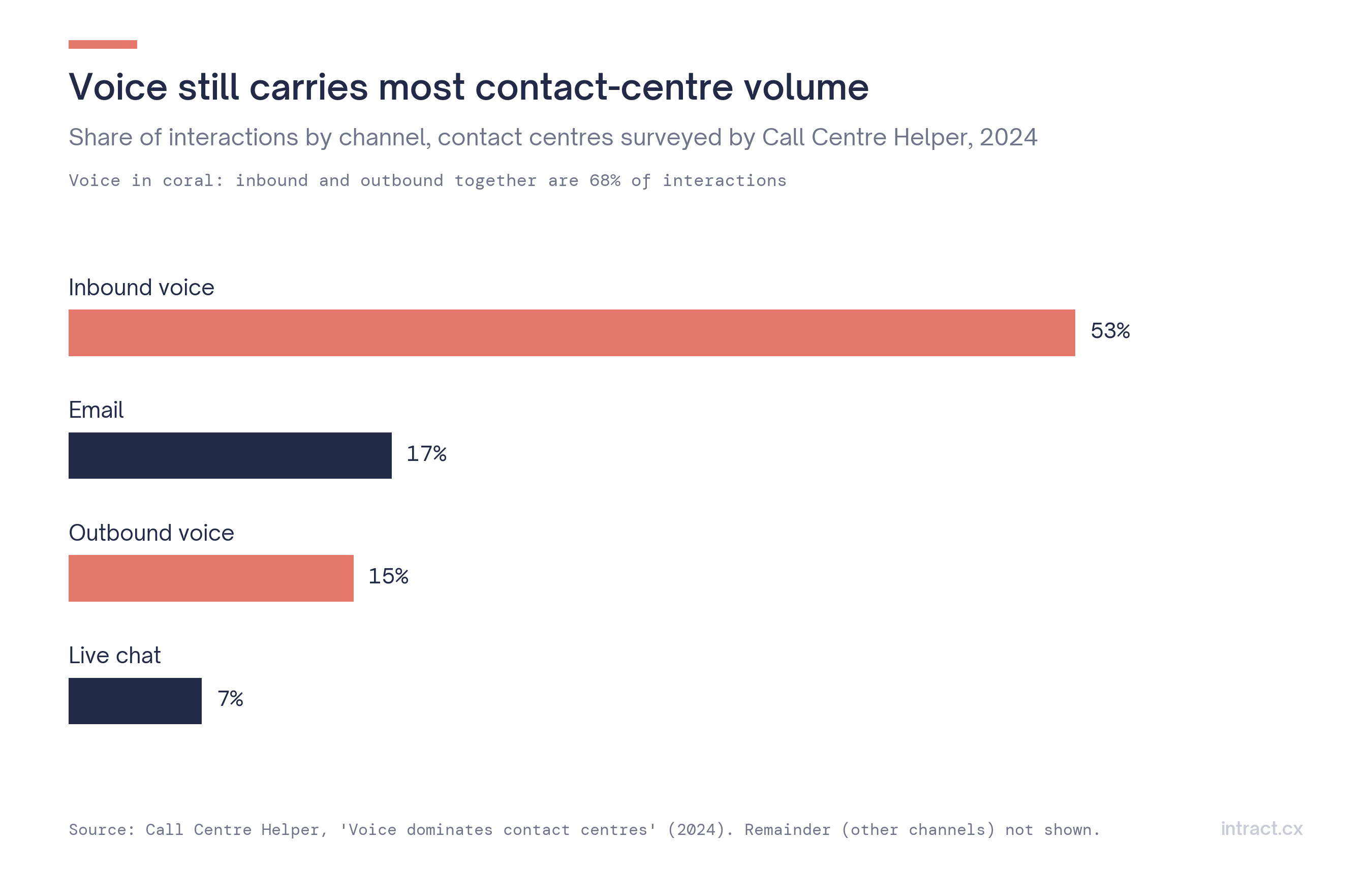 Figure 4. Voice still carries most contact-centre volume.
The practical consequence: a conversation intelligence tool that handles text well but voice poorly misses most of the volume, and a speech analytics tool that cannot read chat and email misses the rest.
5. How to choose: five questions
- What decision will this support? Coaching, compliance evidence, churn prevention, executive reporting? Pick the tool by its output, not its label.
- Do you need acoustic signals? If silence ratios and overtalk are central to your QA, check for them explicitly. Many LLM-based tools focus on what was said.
- Who will configure it? Keyword libraries need specialists. Plain-language categories and rules can be owned by the business, provided you can test accuracy before going live.
- Can every output be traced back? A score or a trend is only useful if a manager can click through to the exact quote.
- Languages and hosting. For European teams: how many languages, how translation works, and where data and transcription are processed.
How Intract fits
Intract is a conversation intelligence layer. It transcribes calls in more than 40 languages (EU transcription endpoint), then produces structured fields on every interaction: summary, business impact, sentiment, urgency, churn risk and an action plan. Teams add their own logic without code (classifiers, structured checklists, rules), test it for accuracy on their own calls, and get dashboards, cited reports and Microsoft Teams alerts. Atlas, the built-in assistant, answers questions about the data in plain language and produces PowerPoint, Excel, Word, PDF or HTML documents.
Inputs: Aircall and Vonage natively; any audio or text conversation through the API.
FAQ
Is conversation intelligence just speech analytics with AI? Technically it builds on the same idea. In practice, the output changes: from counts of keywords to structured answers per conversation.
Do we still need keyword rules? Sometimes. Exact phrases (a product name, a legal formula) are still well served by keyword rules; most other questions are better asked in plain language.
Is transcription accurate enough for compliance? Benchmark error rates are now close to human level, but measure on your own calls: test any automated check against human-validated examples before relying on it.
Methodology and sources
Market figures are analyst estimates and forecasts, not audited totals. Adoption surveys use different samples (general market vs large operations) and are shown separately.
- CMSWire, NICE grabs Nexidia (2016); destinationCRM, Genesys acquires Utopy (2013)
- Call Centre Helper, How does speech analytics work? (2010); Speech analytics 2020 edition; Voice dominates contact centres (2024)
- Microsoft Research, Seide et al. 2011; Xiong et al. 2017; MSR-TR-2017-39
- IBM, Saon et al. 2017; OpenAI, Whisper (2022)
- Forrester, The 2023 CICS Forrester Wave; Gartner, Market Guide for Conversation Analytics Platforms (2024)
- destinationCRM, The age of speech analytics (2015); COPC, Global Benchmarking 2022: QA
- MarketsandMarkets, Speech Analytics Market (2024)
- Contact Center Pipeline, The return to voice (2026, ContactBabel data)