
TL;DR
Running a multilingual contact centre in Belgium means serving customers in French, Dutch, German and often English without splitting QA and reporting into one team per language. Language depends on where customers live: in Brussels, 81.0% of residents know French well, 46.9% English and only 22.3% Dutch, and over 100 languages are recorded. Native-language service pays: 75% of consumers say they are more likely to buy again if customer care is in their language (CSA Research, which sells localisation research). This guide covers Belgium's language realities, the rules around language, the cost of one team per language and what one view across languages takes.
Belgium is a small market with a big operational problem: customers expect service in their language, and that language depends on where they live, sometimes on which street. For a contact centre, the usual result is not one operation but several: a French-speaking team, a Dutch-speaking team, perhaps a German or English desk, each with its own QA, its own reporting and its own blind spots.
Here is what the data says about Belgian language realities, why it matters commercially, and how to run quality and reporting across languages without multiplying everything.
Key figures
| Figure | Value | Source |
|---|---|---|
| Population of Belgium, 1 Jan 2026 | 11.87m | Statbel |
| Flanders / Wallonia / Brussels | 6.90m / 3.71m / 1.26m | Statbel |
| German-speaking Community | ~79,000 (2023) | Statbel |
| Brussels residents with good knowledge of French / English / Dutch | 81.0% / 46.9% / 22.3% | BRIO Taalbarometer 5 (2024) |
| Brussels residents who grew up with no national language at home | 28.8% | BRIO (2024) |
| Languages recorded in Brussels | over 100 | BRIO (2024) |
| Consumers more likely to buy again if customer care is in their language | 75% | CSA Research (2020, 29 countries) |
1. Three regions, three language realities
On 1 January 2026, Belgium had 11,867,634 inhabitants: 6.90m in the Flemish Region, 3.71m in the Walloon Region and 1.26m in Brussels-Capital. The German-speaking Community, counted within Wallonia, had 79,383 inhabitants in 2023.
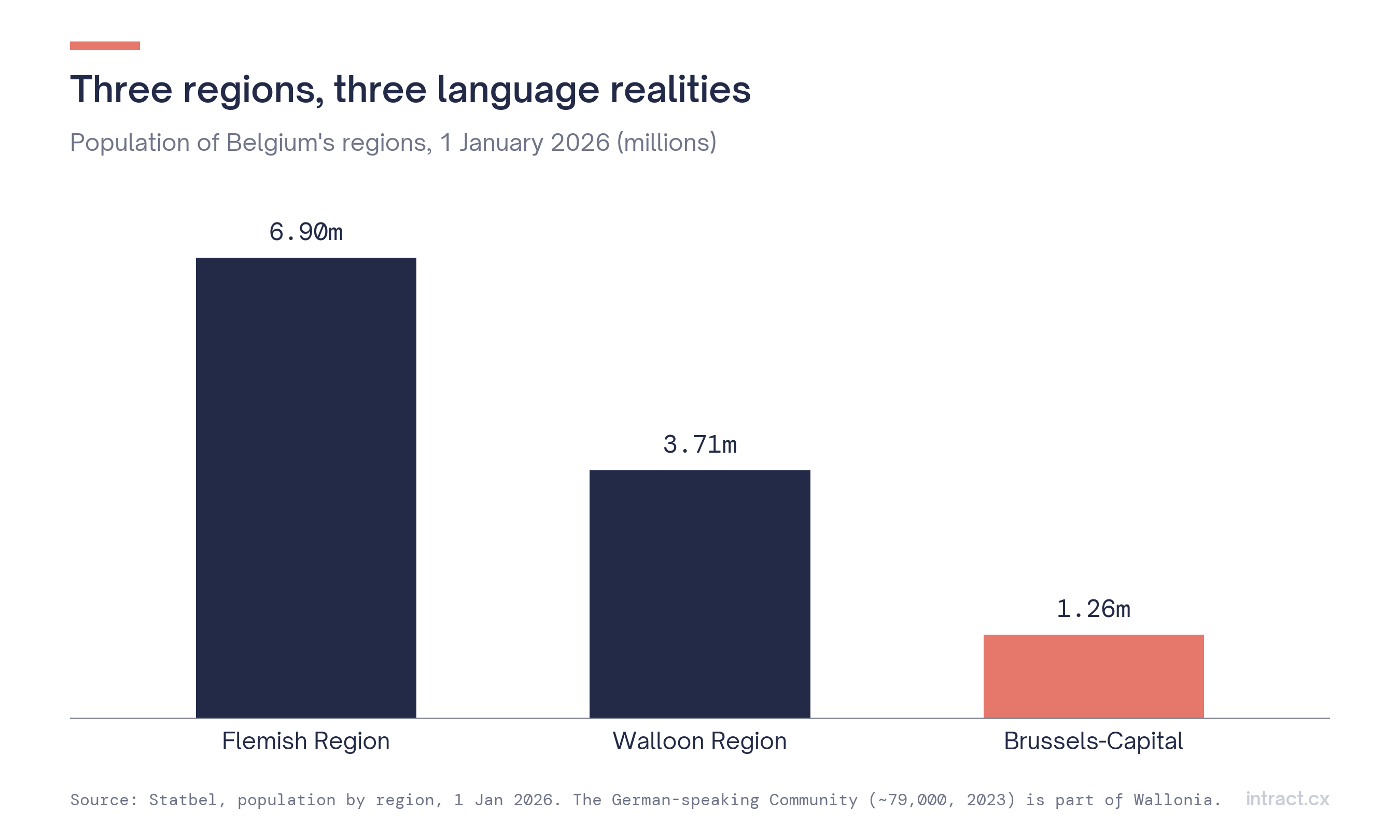 Figure 1. Belgium's regions, 1 January 2026.
Knowledge of the other national language is uneven. Using 2012 Eurobarometer data, Philippe Van Parijs estimated that about 75% of Flemings know French beyond a basic level, against about 20% of Walloons for Dutch. Older work by Ginsburgh and Weber found 59–60% and 19–20% respectively; the definitions differ, but the asymmetry is consistent. Among Belgians aged 15–34, English is now the best-known language at 60.5% "good to very good", ahead of Dutch (57.1%) and French (56.3%).
For a contact centre, the lesson is simple: you cannot assume a Walloon customer will accept Dutch, or that a Flemish customer wants French, even if they can manage it.
2. Brussels: the multilingual stress test
Brussels concentrates the challenge. The fifth BRIO language barometer (2024, 1,627 respondents) found that 81.0% of residents know French well, 46.9% English and 22.3% Dutch. In 2000, English and Dutch were level at about 33%; English has since overtaken Dutch, and 10.5% of residents now speak none of French, Dutch or English.
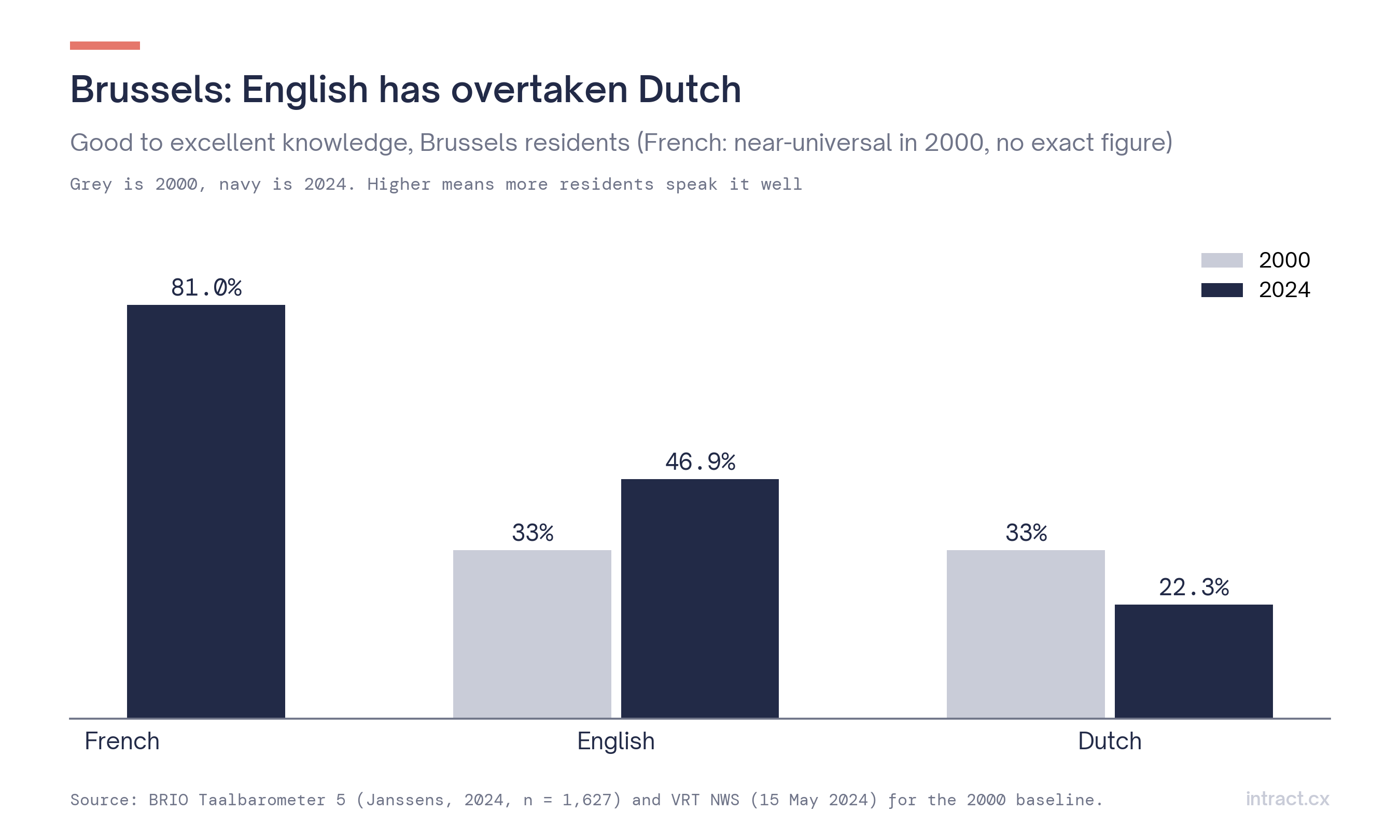 Figure 2. Brussels: English has overtaken Dutch since 2000.
Home languages tell a similar story: 41.3% grew up with French only, but 28.8% with another language only and 18.0% with French plus another language. BRIO recorded over 100 languages, up from 72 at the start of the century.
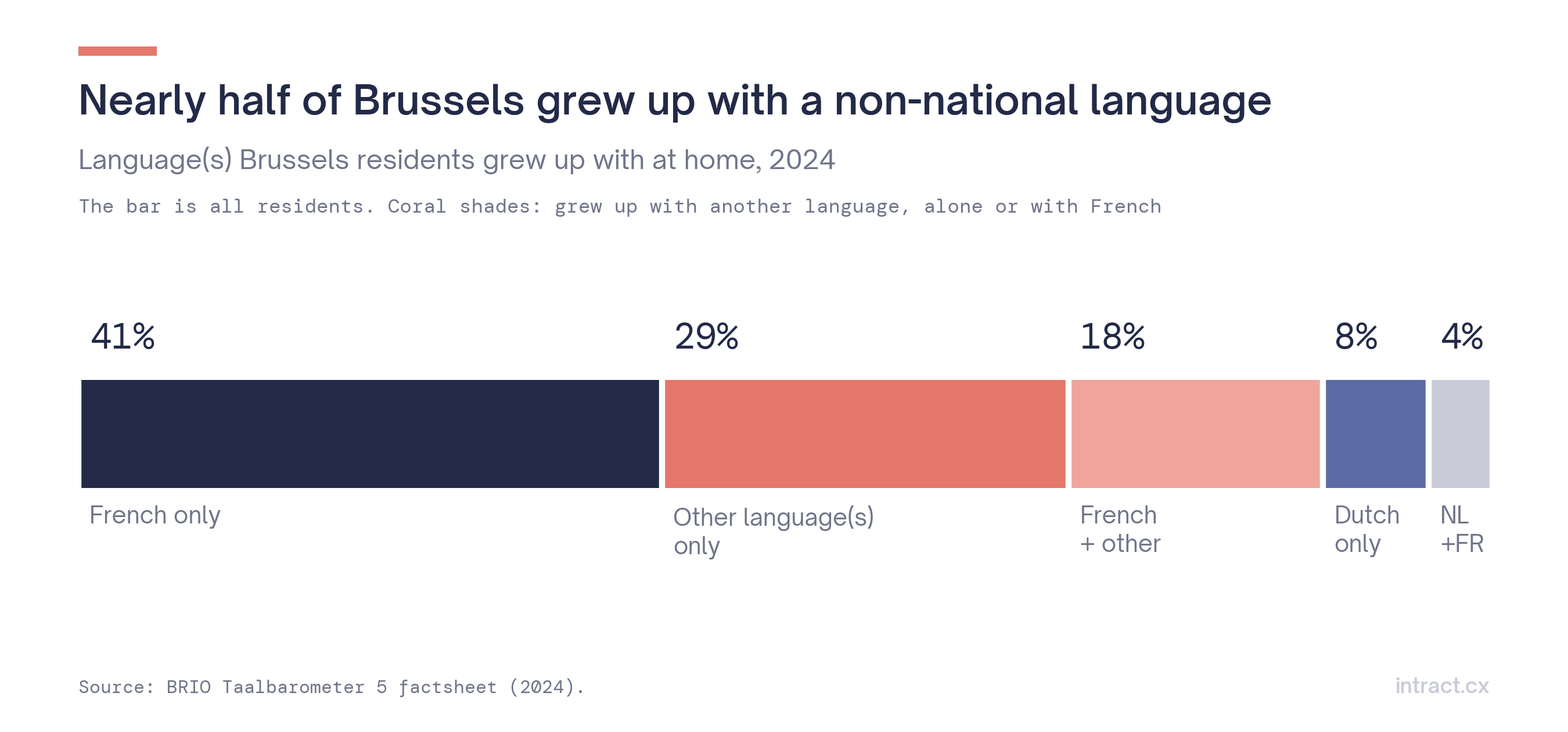 Figure 3. Language(s) Brussels residents grew up with at home.
A Brussels customer may call in French, Dutch, English, Arabic, Spanish or Portuguese, and switch in the middle of a sentence.
3. The rules around language
- Employment (Flanders). The Flemish decree of 19 July 1973 requires employers with a place of business in Flanders to use Dutch for employer-employee relations, on pain of nullity. That affects internal documents such as QA grids, evaluations and coaching notes for Flemish sites.
- Consumer information. Book VI of the Code of Economic Law requires information to be given to consumers clearly and comprehensibly, including in distance contracts.
- What we did not find: a Belgian law requiring customer service to be provided in a given language. In practice, the obligation is commercial rather than legal, which brings us to the next point.
Check specific obligations with your legal team; this is not legal advice.
4. Why native-language service pays
CSA Research surveyed 8,709 consumers in 29 countries. 75% said they are more likely to buy again from the same brand if customer care is in their language; 76% prefer product information in their own language, and 40% never buy from websites in other languages. Even among the most confident English speakers, 60% favour customer care in their own language. (CSA Research sells localisation research, so read with that in mind.)
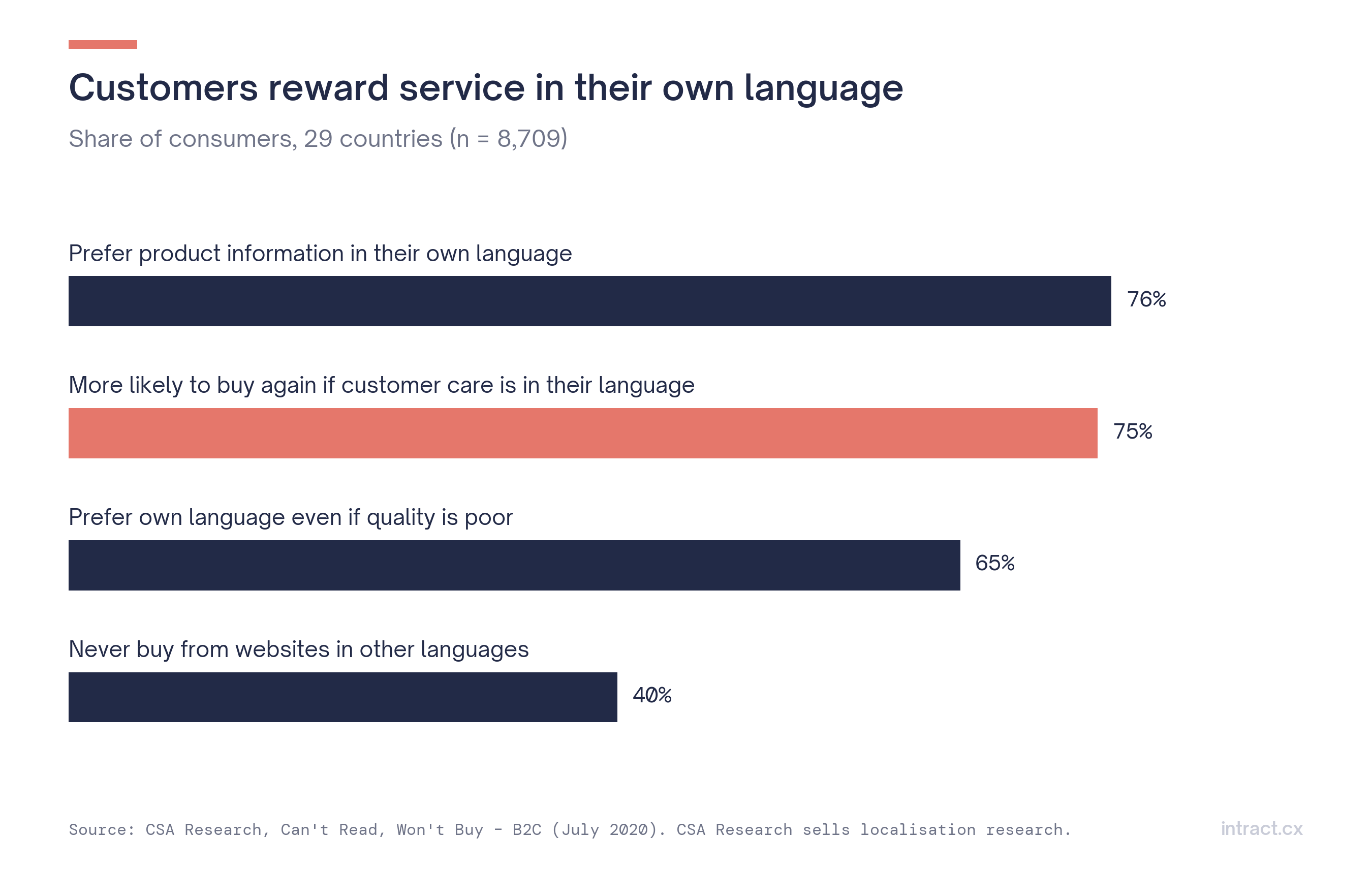 Figure 4. Consumers reward service in their own language.
The same logic applies in Belgium's neighbours. Switzerland's main languages are German (62%), French (23%) and Italian (8%). In Luxembourg, Luxembourgish is the main language of 48.9% of residents and French of 14.9%, with French used by more than half at home, work or school.
5. The operational problem: one team per language
Serving customers in their language is the easy part to state. The hard part comes after the call.
| Activity | Typical multilingual setup | Consequence |
|---|---|---|
| Quality assurance | Each reviewer checks only calls in languages they understand | QA coverage and standards differ by language |
| Reporting | Each team reports in its own language and categories | Head office compares figures that are not comparable |
| Root-cause analysis | Problems surface in one language team first | Cross-market issues are spotted late |
| Customer quotes | Translated into a summary by whoever reads them | The customer's exact words are lost |
| Management | Leaders only read what is translated for them | Decisions rely on second-hand summaries |
6. One view across languages: what it takes
- Transcribe in the customer's language, with automatic detection, so no one has to route by language before analysis.
- Summarise in the reader's language. A Dutch-speaking manager reads every call in Dutch, a French-speaking one in French, including calls held in English or German.
- Keep the customer's quote in the original, with a translation alongside. Nuance lives in the original words.
- Write the grid once. One compliance checklist, one taxonomy of contact reasons, applied to every language, so rates are comparable across markets.
- Protect the terms that must not change: product names, amounts, contract numbers.
- Host in the EU.
How Intract supports this
Intract was built in Brussels for this situation. Calls are transcribed in more than 40 languages with automatic language detection (EU transcription endpoint). Summary, impact, suggested action, action plan and transcript are available in your language; you can switch between original and translated text in one click, and references such as order numbers stay intact. Workflows (categories, compliance checklists) are written once and run on every call regardless of language, and you can filter, sort and group tickets by detected language. The interface is available in English, French, Dutch and German. Data is hosted in the EU.
Calls arrive natively from Aircall and Vonage or through the API; text conversations can be sent through the API.
FAQ
Do we need separate QA teams per language? You still need people who understand each language for coaching. You no longer need them to apply the grid: the same checklist scores every call, and reviewers read results in their own language.
Are customer quotes translated in reports? They are kept in the original language, so the exact words are preserved.
Does it handle regional varieties (Belgian Dutch, Swiss German)? Transcription covers more than 40 languages with automatic detection. Accuracy on regional varieties varies; test on your own calls.
Methodology and sources
Population figures are Statbel's 1 January 2026 data; the German-speaking Community figure is the latest we could verify (2023). Language-knowledge figures come from different surveys and years; definitions differ, so they are shown separately. The 2000 baseline for Brussels comes from VRT NWS reporting on the BRIO barometer.
- Statbel, Population by region, 1 Jan 2026; Structure of the population
- BRIO, Taalbarometer 5 factsheet (2024); BRIO
- VRT NWS, Nieuwe taalbarometer (May 2024)
- Brussels Times, Van Parijs on language knowledge (2023); English among young Belgians (2025)
- Lydian via ELA, Belgium cross-border employment contract; UNamur, Code of Economic Law, Book VI
- CSA Research, Consumers prefer their own language (2020)
- Swiss FSO, Languages; STATEC, Diversité linguistique